

SMACD 2026
To Clock or Not to Clock: Clock Gating Using Netlist Carpentry
Adrian Pitterling, Manuel Jirsak, Eric Schäfer, Georg Gläser
Abstract:
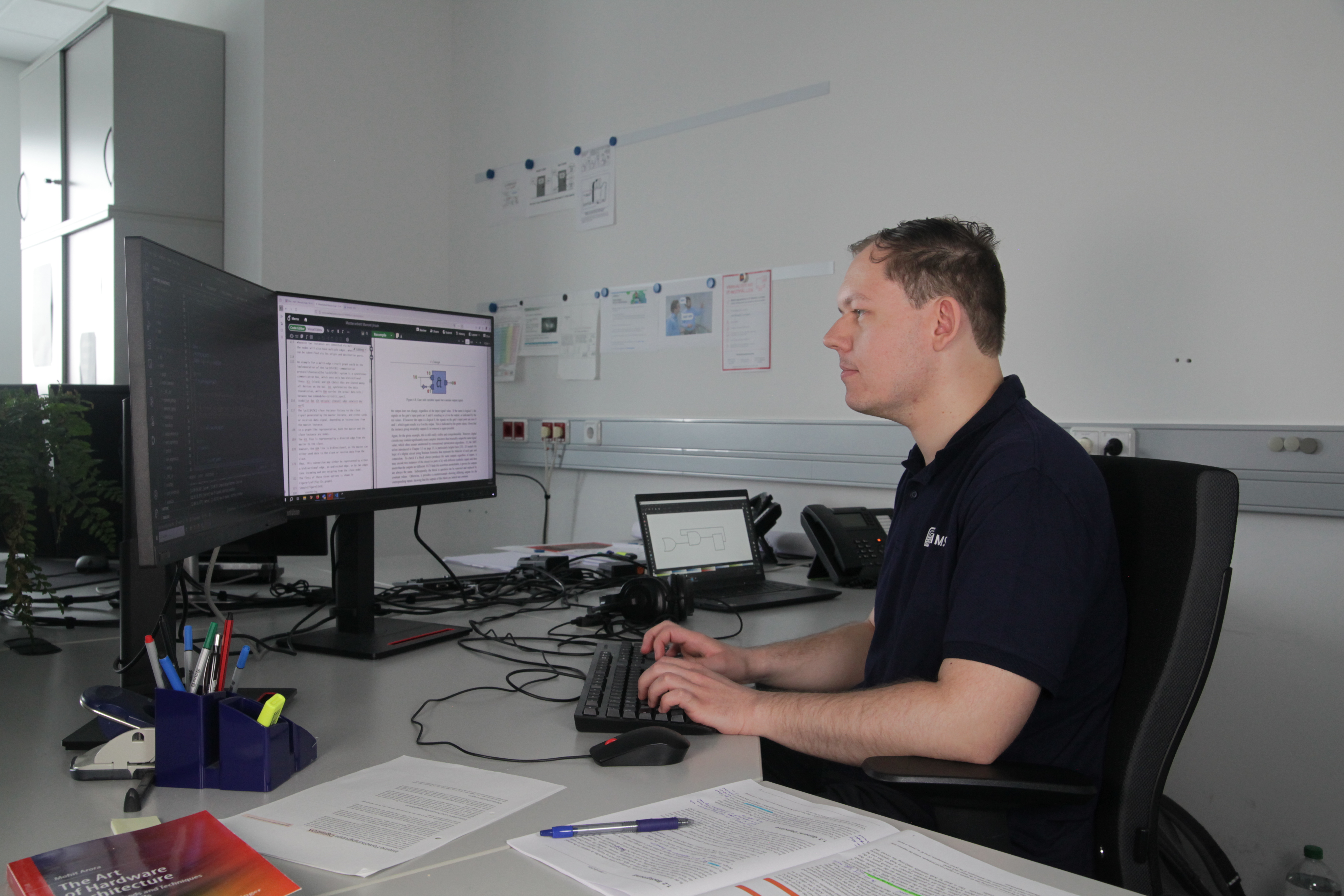
Clock gating is one of the most efficient techniques for reducing power consumption in digital circuits. It is based on deactivating parts of the clock tree, when no clock is needed. Only flip-flops (FF) that actively change their state are clocked. Conventional tools automatically insert clock gates during the synthesis process, but often rely on heuristics to identify insertion points and control signals. We present a more aggressive approach for hierarchically gating the clock of all FFs, at the expense of additional area used for the gating logic. Using the open-source tool Netlist Carpentry, we translate the circuit into a Python object, insert the clock gates, and convert it back to Verilog. We verify the correctness of this transformation with a Yosys-based logic equivalence check. We demonstrate our approach by applying it to the OpenMSP430. We reduced the FF clock activity to 8 % compared to the non-gated version (with an area overhead of 7 %) and beyond the effect of the included manually placed clock gates (23 % activity) or the Yosys-method (20 % activity).
Related content
Patent
DE 10 2016 119 927
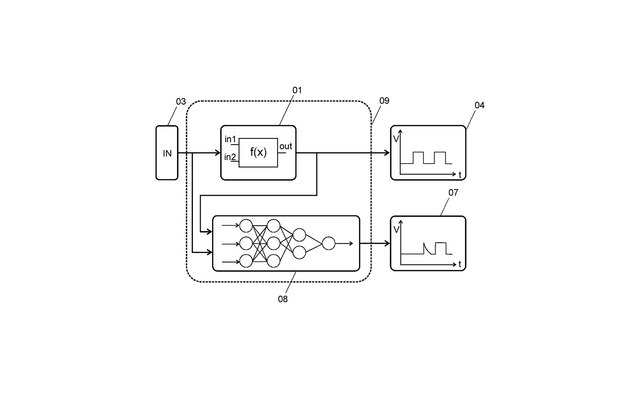
Circuit arrangement for providing the charging energy for a level change on a signal bus, calibration method and signal transmission system

Patent
DE 10 2016 113 283
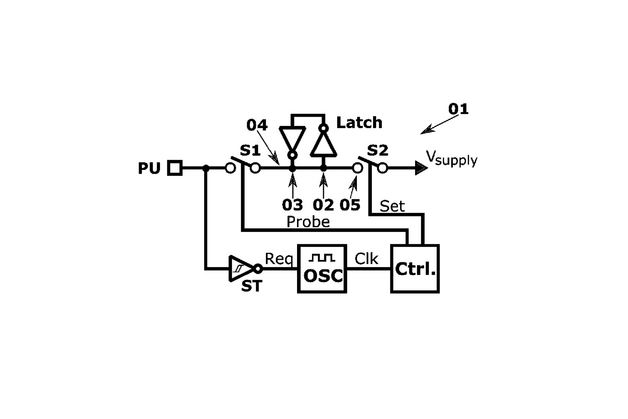
Method for determining a resistance deflection of a Wheatstone bridge in a high temperature environment
Press release,
Reliable and faster chip designs through invasive and parametric simulation methods
Dissertation on new methods for automation in integrated circuit design
This might also be interesting for you

Core topic
AI-based design and test automation
We are researching to use AI to make the development process of integrated sensor systems safer and more cost-effective. AI can help developers in the process to avoid errors and apply informal knowledge in an automated way.
Service for R&D
IC design methods
We develop new AI-based methods and tools for your system-on-chip and FPGA designs to master the increasing complexity of integrated systems and thus further increase performance.

Service for R&D
Integrated Circuits
We offer the design and realisation of application-specific integrated circuits (ASICs) in CMOS, BiCMOS and SOI technologies. We achieve well-performing ASICs with our first runs (first-time right silicon).
Research field
Integrated sensor systems
Here we investigate miniaturised systems manufactured in semiconductor technology consisting of microelectronic components for sensors applications, as well as methods to design these highly complex systems efficiently and safely.
Contact

Contact
Dipl.-Hdl. Dipl.-Des. Beate Hövelmans
Head of Corporate Communications
beate.hoevelmans(at)imms.de+49 (0) 3677 874 93 13
Beate Hövelmans is responsible for the text and image editorial work on this website, for the social media presence of IMMS on LinkedIn and YouTube, the annual reports, for press and media relations with regional and specialist media and other communication formats. She provides texts, photographs and video material for your reporting on IMMS, arranges contacts for interviews and is the contact person for events.