

Lead application Sensor systems for in-vitro diagnostics
Based on our research, we are developing, for example, sensor systems for in vitro diagnostics that enable individual, decentralised health monitoring for everyone with electronic rapid tests.
With these point-of-care tests, various applications will be made possible, such as daily health checks at home, detection of infectious diseases, allergies, genes (DNA), antigens, antibodies, cells, food and drinking water tests, (micro) nutrients, vitamins, etc.
Contact
Contact
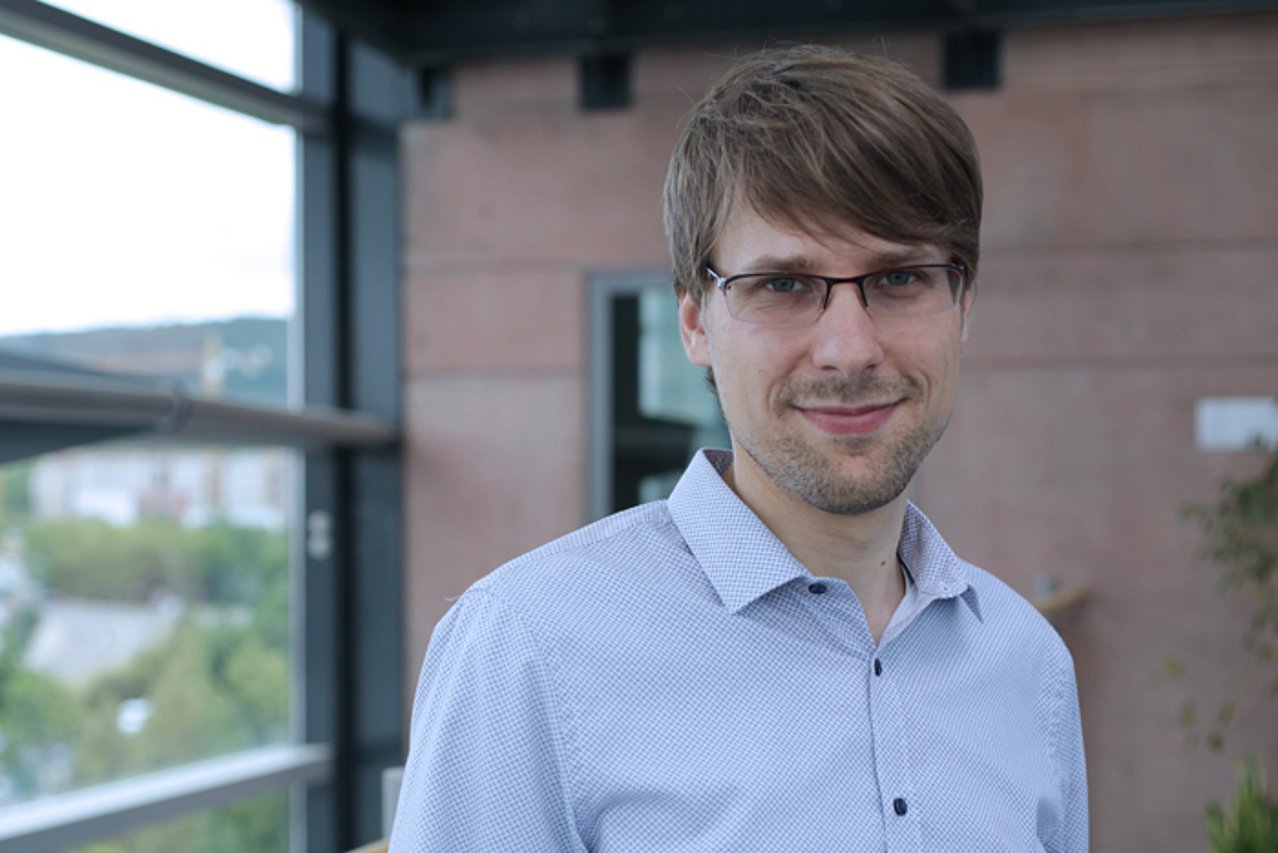
Eric Schäfer, M. Sc.
Head of Microelectronics and Branch Office Erfurt, Authorised Signatory
eric.schaefer(at)imms.de+49 (0) 361 663 25 35
Eric Schäfer and his team research Integrated sensor systems, especially CMOS-based biosensors, ULP sensor systems and AI-based design and test automation. The results are being incorporated into research on the lead applications Sensor systems for in-vitro diagnostics and RFID sensor technology. It will assist you with services for the development of Integrated circuits and with IC design methods.
Related content
Project
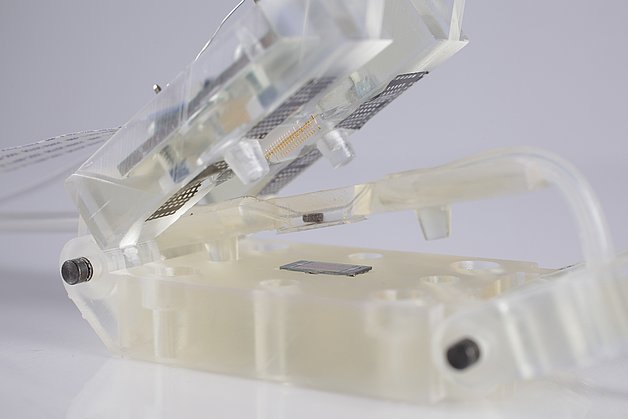
MikroGraph
IMMS is developing evaluation electronics for new, highly sensitive graphene sensor technology for on-site detection of micropollutants in wastewater.
Project
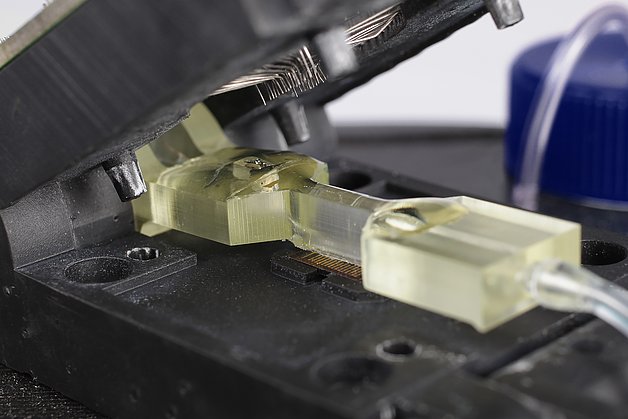
Multi-Interact
For health research, a highly parallelised multiplex system is being developed to precisely and kinetically determine binding energies between biomolecules.

Project
ScoreChip
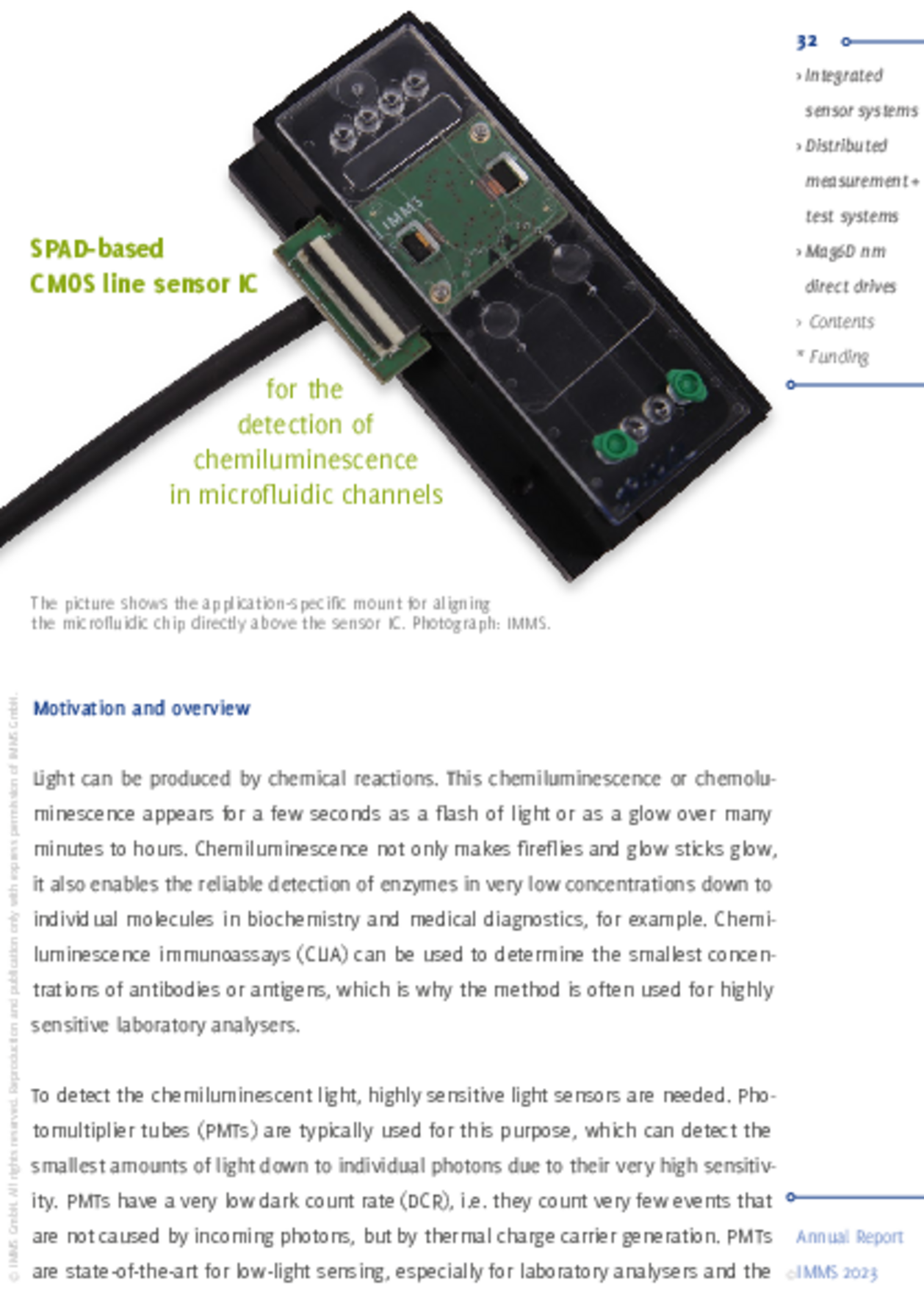
IMMS is developing a SPAD-based line sensor for chemiluminescence detection to create a flexible microfluidic scanner platform for the cost-effective detection of biochemical reactions
Project
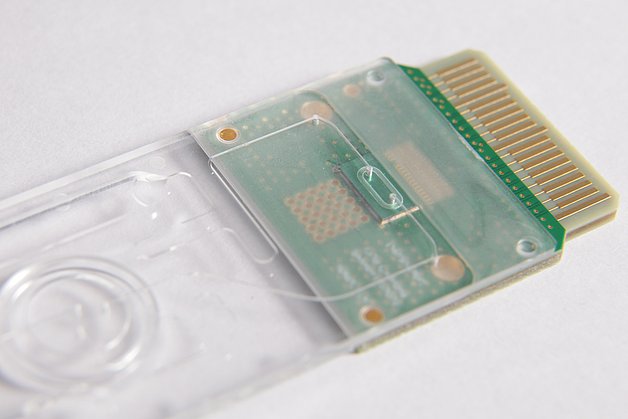
SensInt
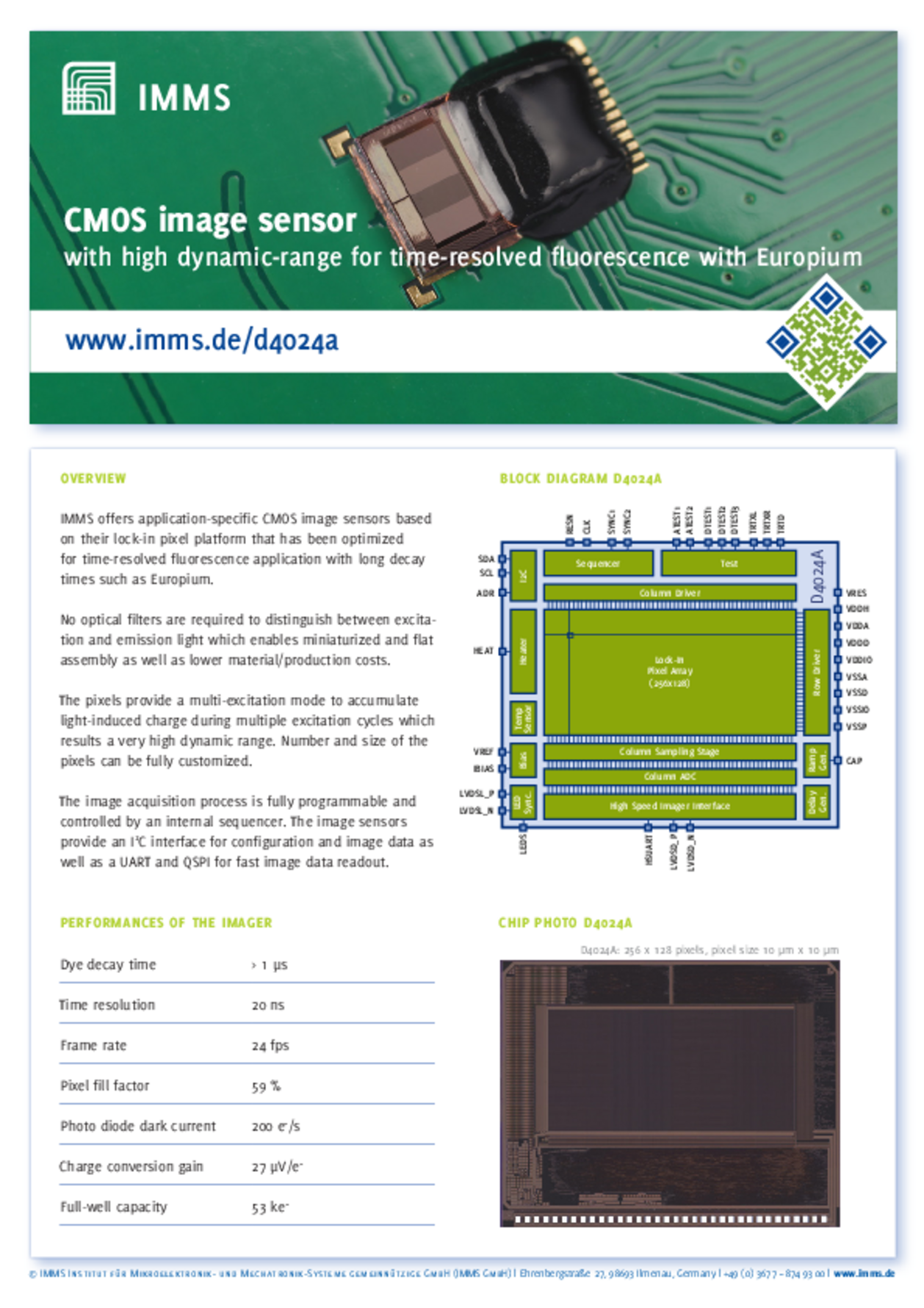
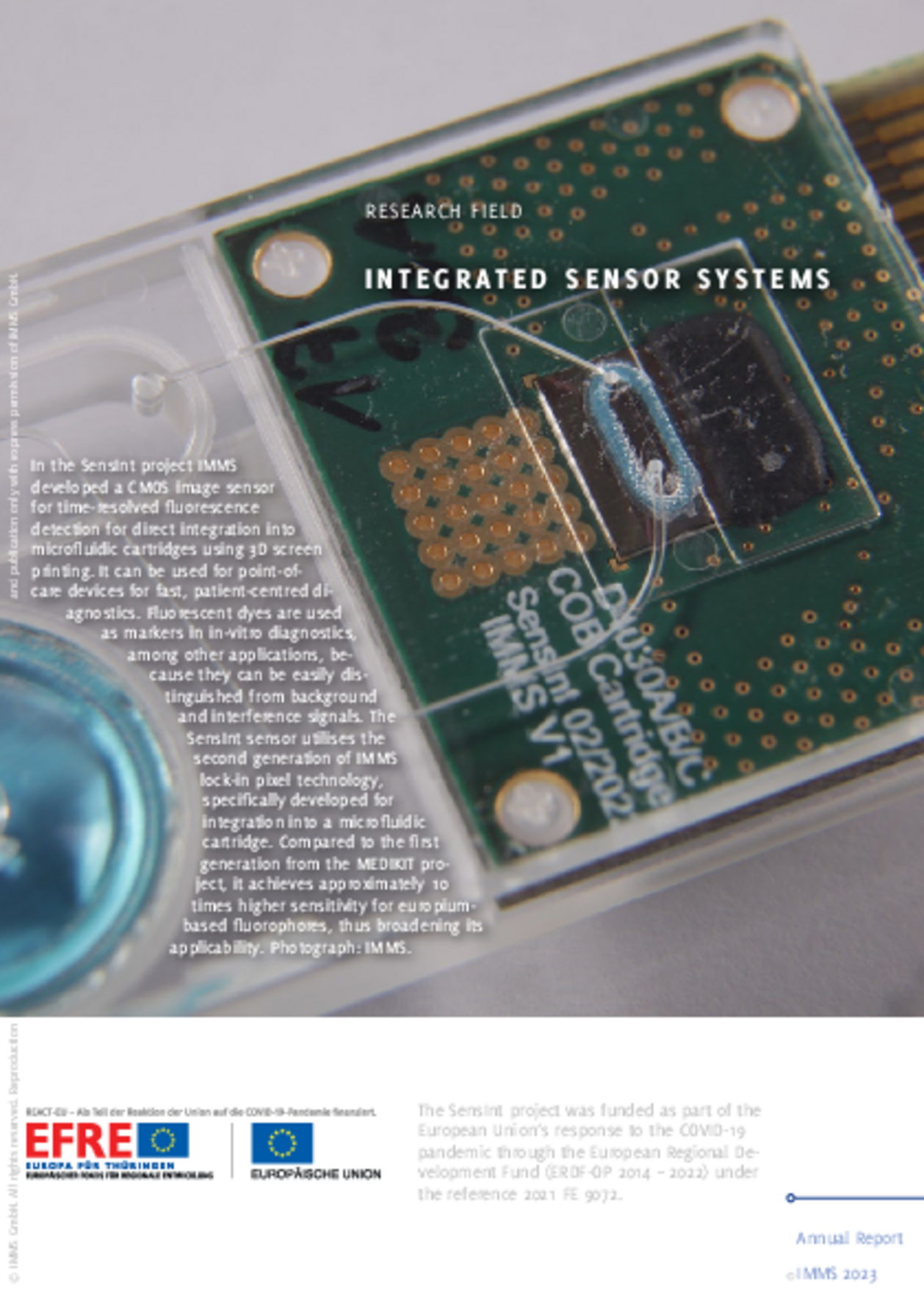
The IMMS is developing a CMOS image sensor for time-resolved fluorescence detection for direct integration into microfluidic cartridges using 3D screen printing.

Reference
Andrea Kulik, FRIZ Biochem
We were particularly impressed by IMMS’s ability to take a holistic approach to the interface between biochemical applications and electronic signal processing. This enabled our biochemical and technical requirements to be precisely translated into microelectronic concepts and implemented in a space-efficient manner.

Reference
Dr. Christof Steiner, DITABIS AG
IMMS can do much more than ‘just’ chip development – especially in the field of photonics and sensor technology. What we particularly liked: The IMMS team quickly and flexibly integrated itself into our network of DITABIS developers and external partners – with lots of ideas and a genuine team spirit.

Reference
Alexander Zimmer, X-FAB Global Services GmbH, Erfurt
”IMMS was able to offer us valuable support due to its many years of experience in the field of measurement technology and circuit design for optical sensors. The reliable work and the trusting partnership is a highly valued basis for the cooperation with IMMS.”

Reference
Dr. Friedrich Scholz, Senova
“IMMS demonstrated great commitment in responding to the huge challenges on the development of the point-of-care test. Our experience demonstrates that IMMS application-oriented analyses, understands and models the biochemical processes. Furthermore, the colleagues implement the specifications with their integrated system design and are flexible in adapting the systems as necessary.”
Ultrasensitive Real-Time Detection of SARS-CoV-2 Proteins with Arrays of Biofunctionalized Graphene Field-Effect Transistors
Hamid Reza Rasouli1, Ghazaleh Eshaghi1, David Kaiser1, Marco Reinhard2, Alexander Rolapp2, Dominik Gary3, Tobias Fischer3, Christof Neumann1, Thomas Weimann4, Katrin Frankenfeld3, Michael Meister2, Andrey Turchanin1,5in Biosensors and Bioelectronics, vol. 315, pp. 119203, 2027, DOI: doi.org/10.1016/j.bios.2026.1192031Friedrich Schiller University Jena, Institute of Physical Chemistry, Helmholtzweg 4, 07743 Jena, Germany, 2IMMS Institut für Mikroelekronik- und Mechatronik-Systeme gemeinnützige GmbH (IMMS GmbH), Ehrenbergstraße 27, 98693 Ilmenau, Germany, 3fzmb GmbH – Forschungszentrum für Medizintechnik und Biotechnologie, Geranienweg 7, 99947 Bad Langensalza, Germany, 4Physikalisch-Technische Bundesanstalt (PTB), Bundesallee 100, 38116 Braunschweig, Germany, 5Jena Center for Soft Matter (JCSM), Philosophenweg 7, 07743 Jena, GermanyControl Logic Design with noRTL
Georg Gläser1International Summer School on Microelectronics 2026 (ISSOM), , Hannover, Germany1IMMS Institut für Mikroelekronik- und Mechatronik-Systeme gemeinnützige GmbH (IMMS GmbH), Ehrenbergstraße 27, 98693 Ilmenau, GermanyHands-on: Python for Hardware Design – Introduction to noRTL: create complex digital circuits from Python code using Jupyter notebooks
Georg Gläser1HeiChips 2026, HeiChips Summer School on Open-Source Chip Design, , Heidelberg University, Germany1IMMS Institut für Mikroelekronik- und Mechatronik-Systeme gemeinnützige GmbH (IMMS GmbH), Ehrenbergstraße 27, 98693 Ilmenau, GermanyTo Clock or Not to Clock: Clock Gating Using Netlist Carpentry
Adrian Pitterling1, Manuel Jirsak1, Eric Schäfer1, Georg Gläser12026 22th International Conference on Synthesis, Modeling, Analysis and Simulation Methods and Applications to Circuit Design (SMACD), , Dresden, Germany, DOI: doi.org/10.1109/SMACD70206.2026.116478301IMMS Institut für Mikroelekronik- und Mechatronik-Systeme gemeinnützige GmbH (IMMS GmbH), Ehrenbergstraße 27, 98693 Ilmenau, Germany
This might also be interesting for you
Core topic
CMOS-based biosensors
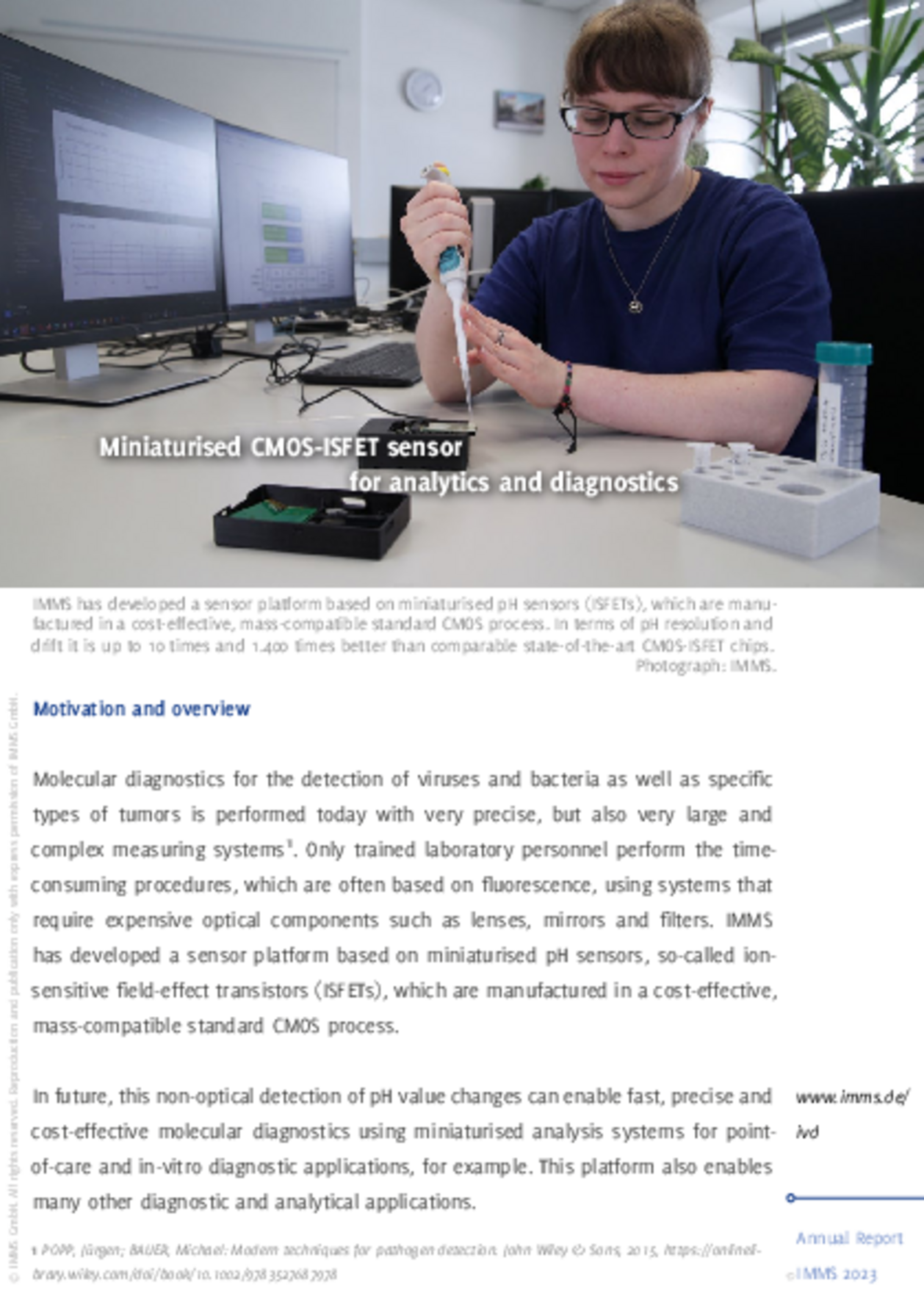
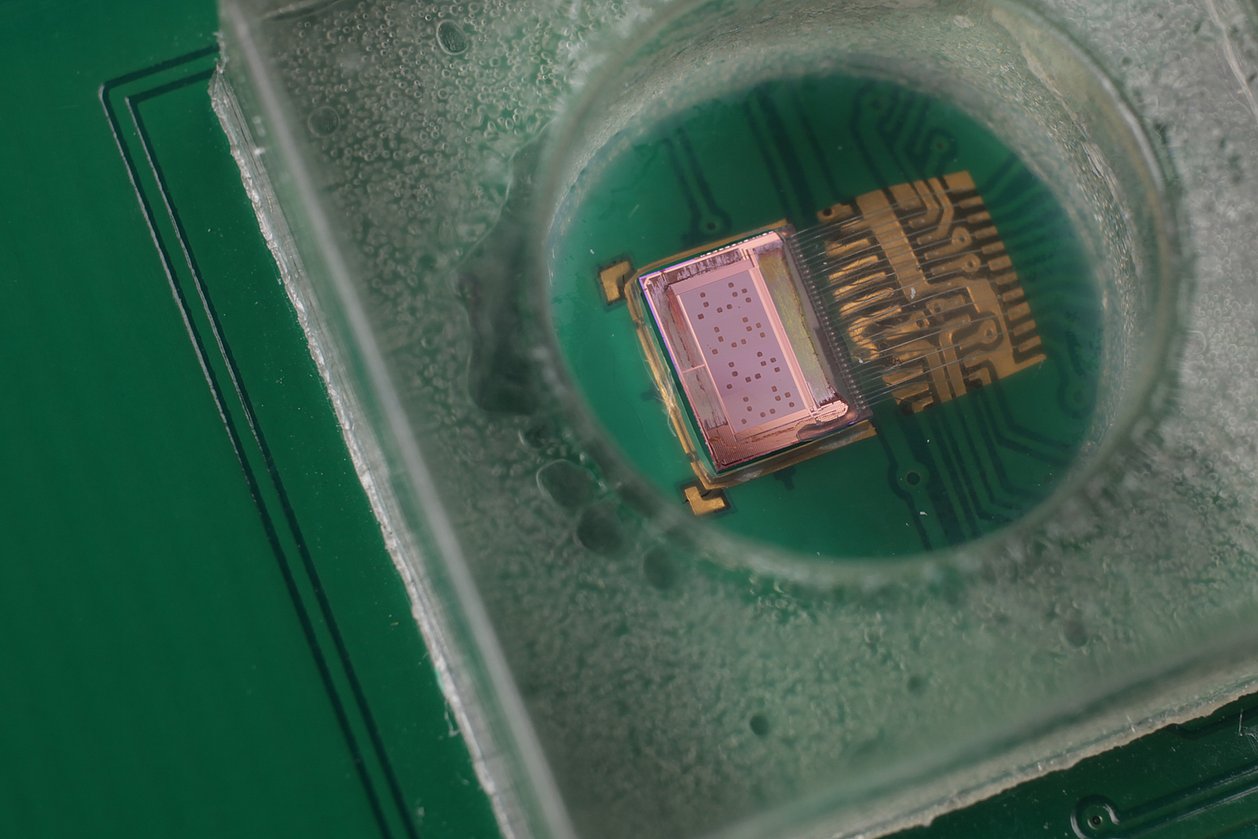
We are researching CMOS-integrated transducers and their interaction with biological receptors. They offer the potential for precise, digital and cost-effective point-of-care tests and allow properties to be recorded on a molecular scale.
Service for R&D
Integrated Circuits
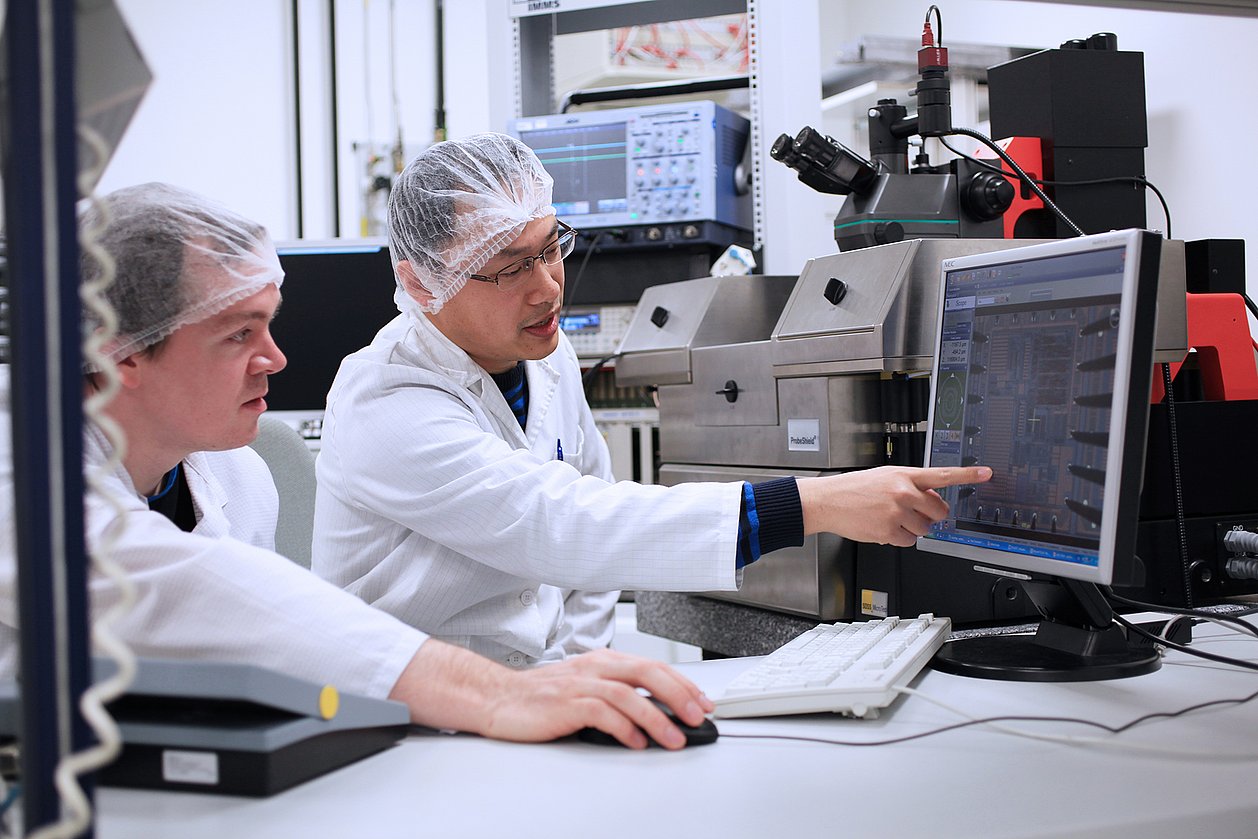
We offer the design and realisation of application-specific integrated circuits (ASICs) in CMOS, BiCMOS and SOI technologies. We achieve well-performing ASICs with our first runs (first-time right silicon).
Research field
Integrated sensor systems
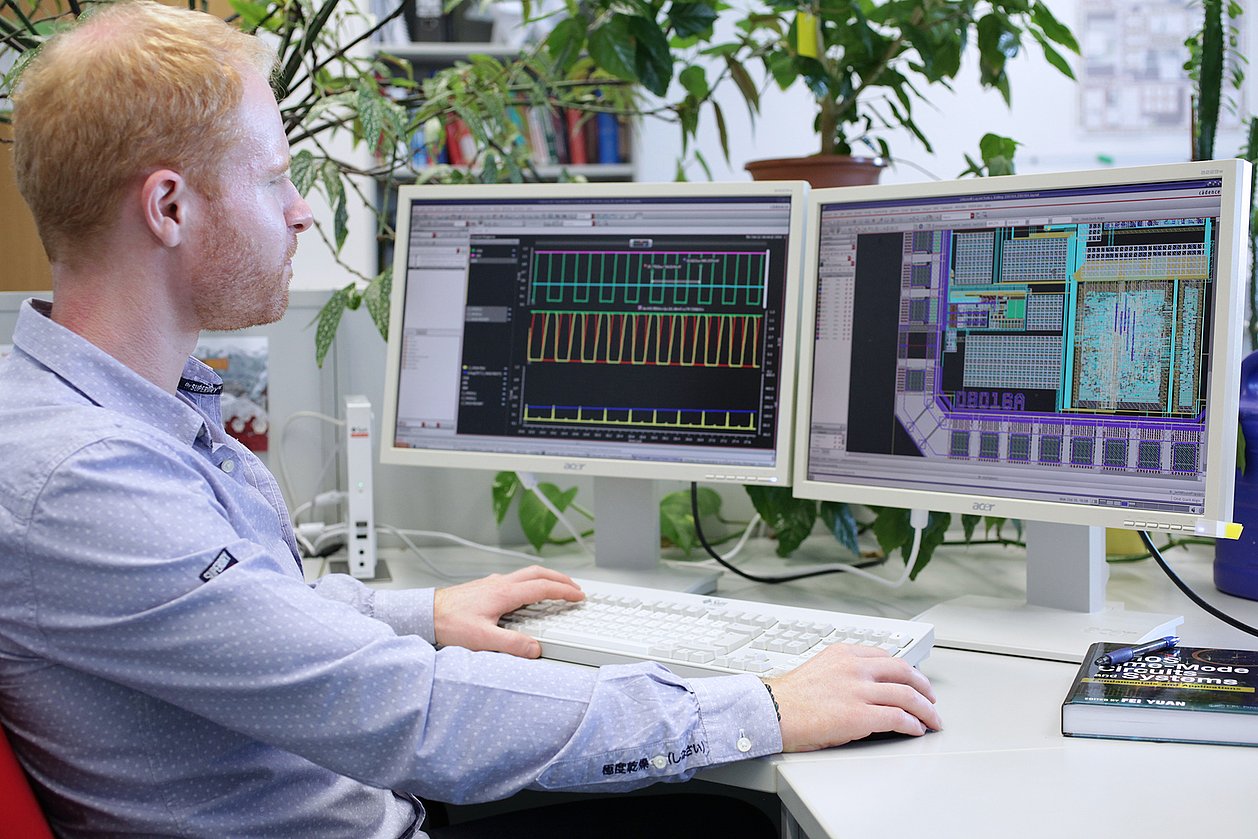
Here we investigate miniaturised systems manufactured in semiconductor technology consisting of microelectronic components for sensors applications, as well as methods to design these highly complex systems efficiently and safely.
Core topic
ULP sensor systems
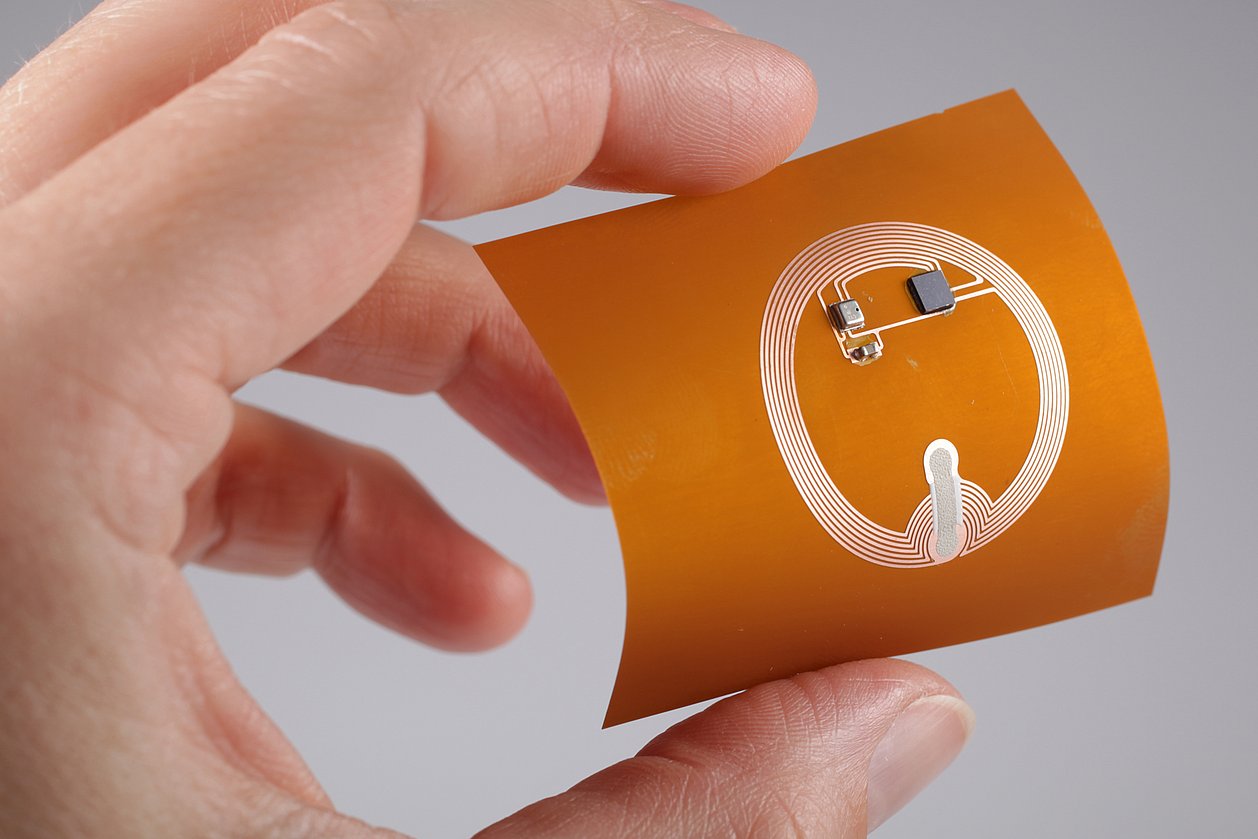
We research and develop ultra-low-power (ULP) sensor systems that require very little power and have integrated energy management components. Our goal is to use them to open up new applications for the Internet of Things.