

Patent DE 10 2013 114 046
Electronic delay circuit in CMOS technology
Electronic delay circuit in CMOS technology for emitting an output signal (OUT/OUTB) delayed in time with respect to an input signal (IN), comprising
- a CMOS thyristor primary switch formed from at least two transistors (M3, M6), whose switching signal (VT) occurring at the switching output is fed to a secondary switch which emits the output signal (OUT/OUTB);
- an integration capacitor (C0) which is connected between a supply voltage (VDD) and a node (VCAP) which connects the gate electrode of one transistor (M6) to the drain electrode of the other transistor (M3) of the primary switch and which can be discharged via a discharging means (M2);
- a switch (M4) which receives the input signal (IN) and is used to switch the discharging means (M2);
- reset elements (M5, M7) for resetting the primary switch (M3, M6) after the output signal has changed; characterised in that an additionally connected component is arranged at the switching output (VT) of the primary switch (M3, M6) as a discharge element (C1; M9) for discharging the sub-threshold current of the primary switch (M3, M6).

Patent No.:DE 10 2013 114 046
Inventor:Benjamin Saft. Eric Schäfer. André Jäger
Application:
Delay elements as a component of integrated circuits in energy self-sufficient systemsResearch field:Integrated sensor systems
granted patent
Application date:13 December 2013
Date of first publication:18 June 2015
Date of publication of grant:24 December 2015
Related content

Award
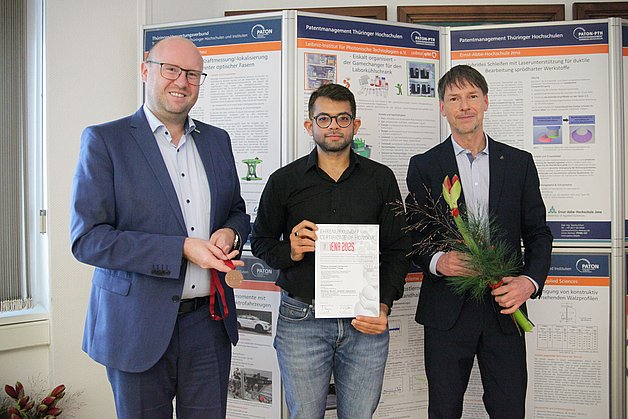
iENA bronze medal for "Longer life for wireless/radio sensors – Self-learning sensor system for industrial maintenance"
Rick Pandey
Award
Silbermedaille für Erfindung / Neuheit: Elektronische Verzögerungsschaltung in CMOS-Technologie
André Jäger
Project
HoLoDEC
IMMS researches ultra-low-power architectures (ULP) and circuit concepts as well as energy-efficient edge-AI systems with overall system energy modeling

Project
StorAIge
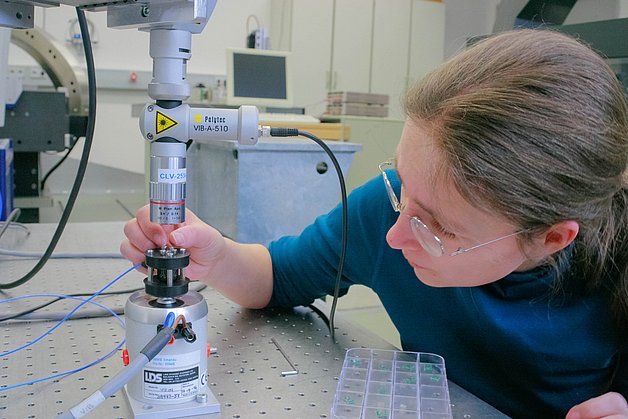
We are researching the use of ultra-low power embedded memories in wireless sensor front-end ICs for monitoring the condition of wind turbines and individual plants produced in greenhouses.
Project
GreenSense
For bio-analysis IMMS developed energy-efficient multi-parametric RFID microsensors and energy harvesting modules for operating autonomous sensors.
Press release,
Extended service life for self-teaching wireless sensors for industrial maintenance
IMMS patent for edge AI solution wins bronze medal at iENA 2025
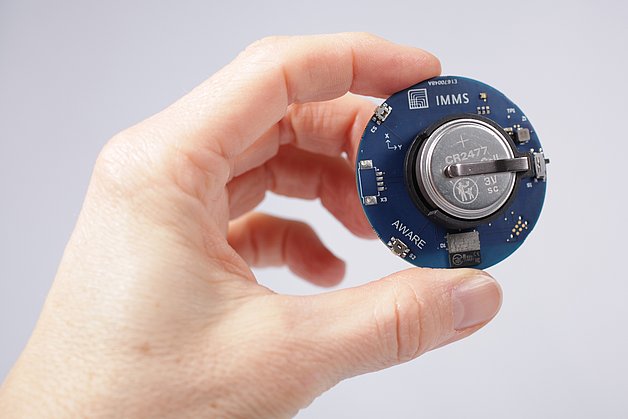
Press release,
AI without the net: Energy-efficient edge AI sensor system for industrial monitoring applications
IMMS exhibits at embedded world
Press release,
Highly accurate and battery-free measurement via RFID
IMMS PhD candidate defends dissertation on precise passive RFID sensor technology
Vom Sensor zur Entscheidung: Souveräne Datenverarbeitung auf eingebetteten Systemen
Sebastian Uziel1KI Summer Connect: Souveräne KI – Daten, Modelle und Infrastruktur in eigener Hand, , Jena, Germany1IMMS Institut für Mikroelekronik- und Mechatronik-Systeme gemeinnützige GmbH (IMMS GmbH), Ehrenbergstraße 27, 98693 Ilmenau, GermanyCase Study on Compression of Vibration Data for Distributed Wireless Condition Monitoring Systems.
Rick Pandey1, Felix Grimm2,3, Dominik Nille2, Christoph Böckenhoff2, Jonathan Gamez1, Sebastian Uziel1, Albert Dorneich2, Tino Hutschenreuther1, Silvia Krug1,4Applied Sciences 2025, 15(22), 12346, DOI: doi.org/10.3390/app1522123461IMMS Institut für Mikroelekronik- und Mechatronik-Systeme gemeinnützige GmbH (IMMS GmbH), Ehrenbergstraße 27, 98693 Ilmenau, Germany, 2Balluff GmbH, Zabergäustraße 8, 73765 Neuhausen auf den Fildern, Germany, 3University of Stuttgart, Institute of Smart Sensors (IIS), Pfaffenwaldring 47, 70569 Stuttgart, Germany, 4Mid Sweden University, Department of Computer and Electrical Engineering, Holmgatan 10, 851 70 Sundsvall, SwedenSmartes Maschinenmonitoring – Anomalien mit Edge-KI detektieren
Sebastian Uziel1in Markt&Technik, Trend Guide Industrie 4.0/IIoT/KI, 2025, pp. 37-40, https://wfm-publish.blaetterkatalog.de1IMMS Institut für Mikroelekronik- und Mechatronik-Systeme gemeinnützige GmbH (IMMS GmbH), Ehrenbergstraße 27, 98693 Ilmenau, GermanySmartes Maschinenmonitoring – Anomalien mit Edge-KI detektieren
Sebastian Uziel1in elektroniknet.de, , https://www.elektroniknet.de/automation/industrie-40-iot/anomalien-mit-edge-ki-detektieren.228572.html1IMMS Institut für Mikroelekronik- und Mechatronik-Systeme gemeinnützige GmbH (IMMS GmbH), Ehrenbergstraße 27, 98693 Ilmenau, Germany
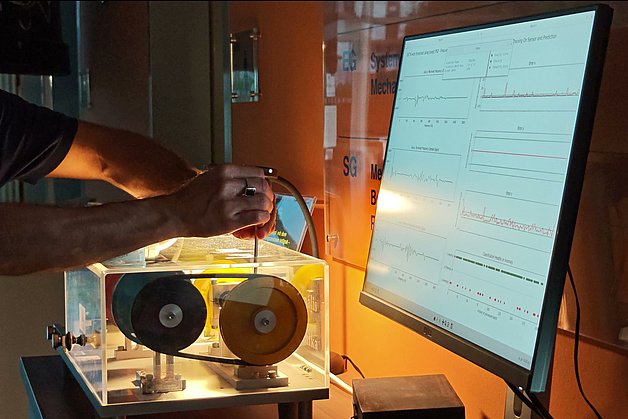
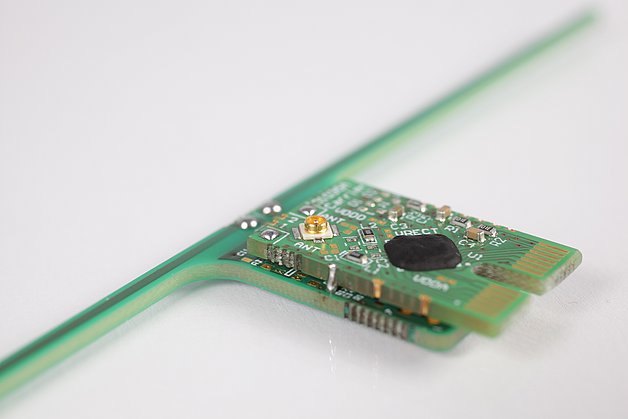
Event,
InnoCON 2026
Praxisnahe Plattform Thüringens für Austausch, Inspiration und den Einstieg in Forschung und Entwicklung unter dem Leitmotiv „Erfolg durch Kooperation und Vernetzung“
Contact

Contact
Eric Schäfer, M. Sc.
Head of Microelectronics and Branch Office Erfurt, Authorised Signatory
eric.schaefer(at)imms.de+49 (0) 361 663 25 35
Eric Schäfer and his team research Integrated sensor systems, especially CMOS-based biosensors, ULP sensor systems and AI-based design and test automation. The results are being incorporated into research on the lead applications Sensor systems for in-vitro diagnostics and RFID sensor technology. It will assist you with services for the development of Integrated circuits and with IC design methods.

Contact
Dr.-Ing. Ludwig Herzog
Head of Mechatronics
ludwig.herzog(at)imms.de+49 (0) 3677 874 93 60
Dr. Ludwig Herzog will provide detail on our research on magnetic 6D direct drives with nm precision for the nm measurement and structuring of objects. He supports you with services for the development of mechatronic systems, for simulation, design and test of MEMS as well as for finite element modelling (FEM) and simulation.

Contact
Dr.-Ing. Tino Hutschenreuther
Head of System Design
tino.hutschenreuther(at)imms.de+49 (0) 3677 874 93 40
Dr. Tino Hutschenreuther will answer your questions on our research in Smart distributed measurement and test systems and the related core topics Analysis of distributed IoT systems, Embedded AI and Real-time data processing and communications, on the lead applications Adaptive edge AI systems for industrial application and IoT systems for cooperative environmental monitoring as well as on the range of services for the development of embedded systems.
This might also be interesting for you
Research field
Integrated sensor systems
Here we investigate miniaturised systems manufactured in semiconductor technology consisting of microelectronic components for sensors applications, as well as methods to design these highly complex systems efficiently and safely.
Lead application
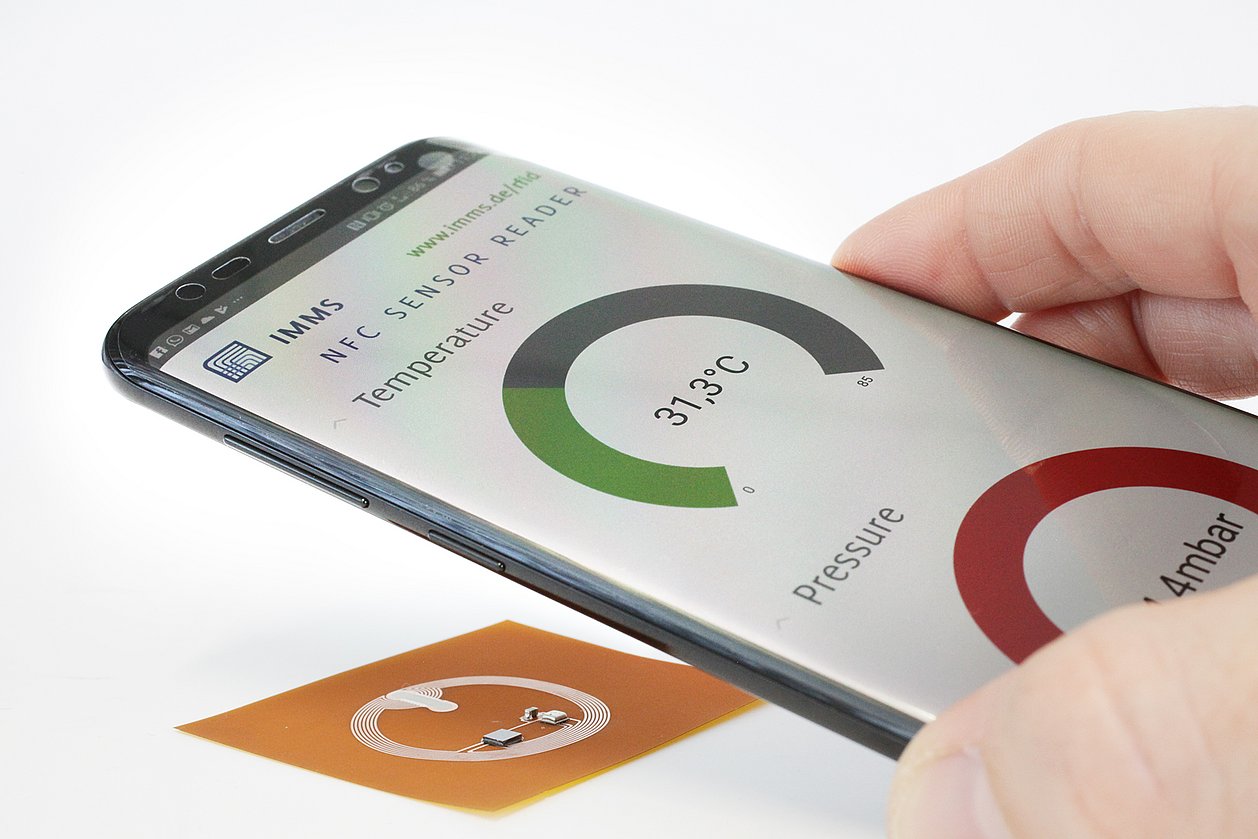
RFID sensor technology
We are researching energy-efficient solutions for RFID sensor technology in order to open up new applications and, for example, to make processes in industry more resource-efficient.
Lead application
Sensor systems for in-vitro diagnostics
Here we are developing sensor systems for in-vitro diagnostics that enable individual, decentralised health monitoring for all with electronic rapid tests.