

Project NeAIxt
IMMS expands its UHF RFID sensor transponder ICs with innovative memory technology for smart sensor applications in logistics
Expansion of IMMS UHF RFID sensor technology for smart logistics applications
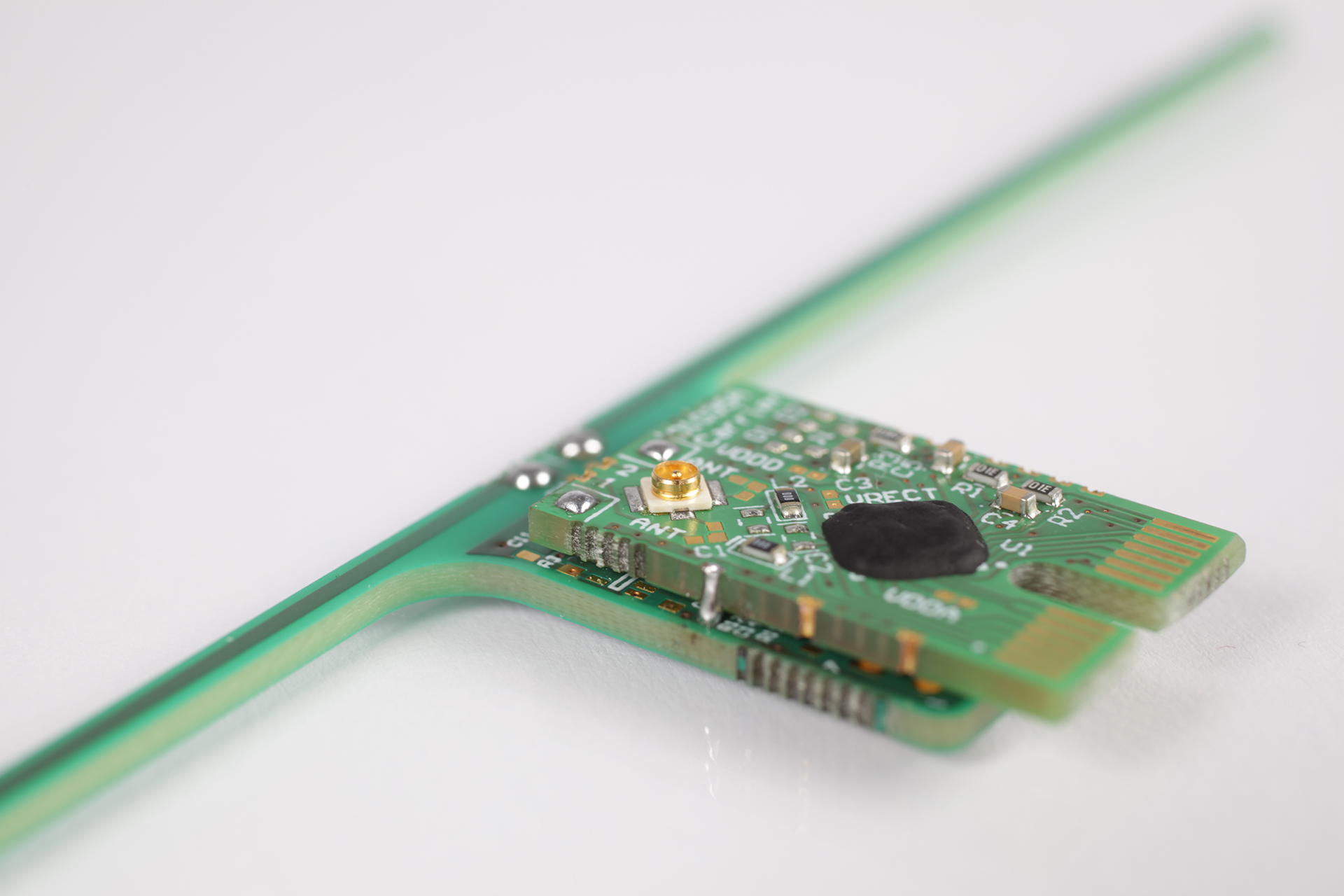
IMMS is expanding its ultra-high-frequency RFID sensor technology with a novel, particularly energy-efficient storage technology. The aim is to provide intelligent identification and sensor solutions for industry and logistics that are energy-efficient and open up new application possibilities, such as monitoring cold chains or material integrity. In the project, IMMS is supplying a powerful UHF RFID transponder IC, which is being integrated into a Bluetooth Low Energy (BLE)-based sensor node by project partner microsensys. This sensor node is to be activated via existing RFID infrastructures and then perform data processing and communication – an approach that significantly increases energy efficiency and extends battery life.
Challenges with moving objects
microsensys plans to use the sensor nodes in fast-moving objects that are to be read by stationary infrastructure, for example in monitoring production resources. In such dynamic scenarios, long ranges and particularly fast response times are crucial for reliable wake-up behaviour to ensure fast and accurate data acquisition.
Innovative storage technology as a technological basis
The basis for this is the proven UHF transponder technology of IMMS from the StorAIge and HoLoDEC projects. It will be supplemented by a novel FeRAM memory IP from project partner X-FAB, which will also be developed in the NeAIxt project. This memory solution is characterised by extremely low energy consumption and will play a central role in the new chip design. In addition, IMMS will explore further approaches to accelerating the wake-up process and evaluate them in prototypes. The result will be a forward-looking solution for digital logistics.
.
.
Acronym / Name:
NeAIxt / Next Generation of edge AI crossing technology fieldsDuration:2025 – 2028
Application:
Automation technology and Industry 4.0Research field:Integrated sensor systems
Related content
An Adaptive Hybrid Charge Pump for Efficient Energy Harvesting in UHF RFID Systems
Rohit Kesharwani1, André Jäger1, Martin Grabmann1, David Schreiber1, Georg Gläser1, Eric Schäfer12026 IEEE International Conference on RFID Technology and Applications (RFID-TA), , Leuven, Belgium1IMMS Institut für Mikroelekronik- und Mechatronik-Systeme gemeinnützige GmbH (IMMS GmbH), Ehrenbergstraße 27, 98693 Ilmenau, Germany
Contact

Contact
Eric Schäfer, M. Sc.
Head of Microelectronics and Branch Office Erfurt, Authorised Signatory
eric.schaefer(at)imms.de+49 (0) 361 663 25 35
Eric Schäfer and his team research Integrated sensor systems, especially CMOS-based biosensors, ULP sensor systems and AI-based design and test automation. The results are being incorporated into research on the lead applications Sensor systems for in-vitro diagnostics and RFID sensor technology. It will assist you with services for the development of Integrated circuits and with IC design methods.

Funding
The NeAIxt project has received funding from the European Union’s Horizon Europe research and innovation programme under the HORIZON-JU-Chips-2024-1-IA grant agreement No 101194172. Views and opinions expressed are, however, those of the author(s) only and do not necessarily reflect those of the European Union or CHIPS JU. Neither the European Union nor the granting authority can be held responsible for them. The project is also supported by its members France, Italy, Czech Republic, Germany, Sweden, Danmark, Greece, Spain, Netherland, Portugal, Turkey, Switzerland. In the NeAIxt project, IMMS is funded by the German Federal Ministry of Research, Technology and Space under the grant agreement number 16MEE0590T, and Thüringen’s Ministry of Economic Affairs, Agriculture and Rural Areas under the reference 2025 ECS 0004.
This might also be interesting for you
Service for R&D
Integrated Circuits
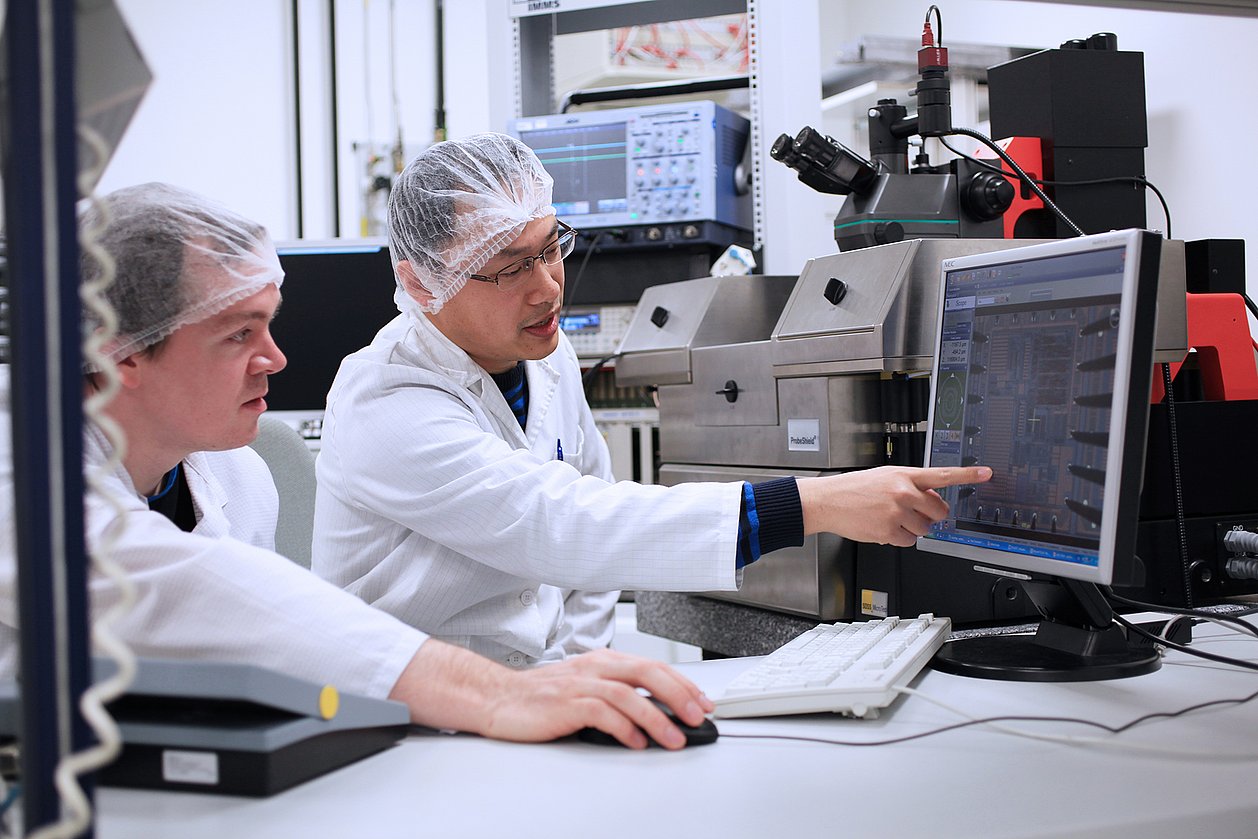
We offer the design and realisation of application-specific integrated circuits (ASICs) in CMOS, BiCMOS and SOI technologies. We achieve well-performing ASICs with our first runs (first-time right silicon).
Research field
Integrated sensor systems
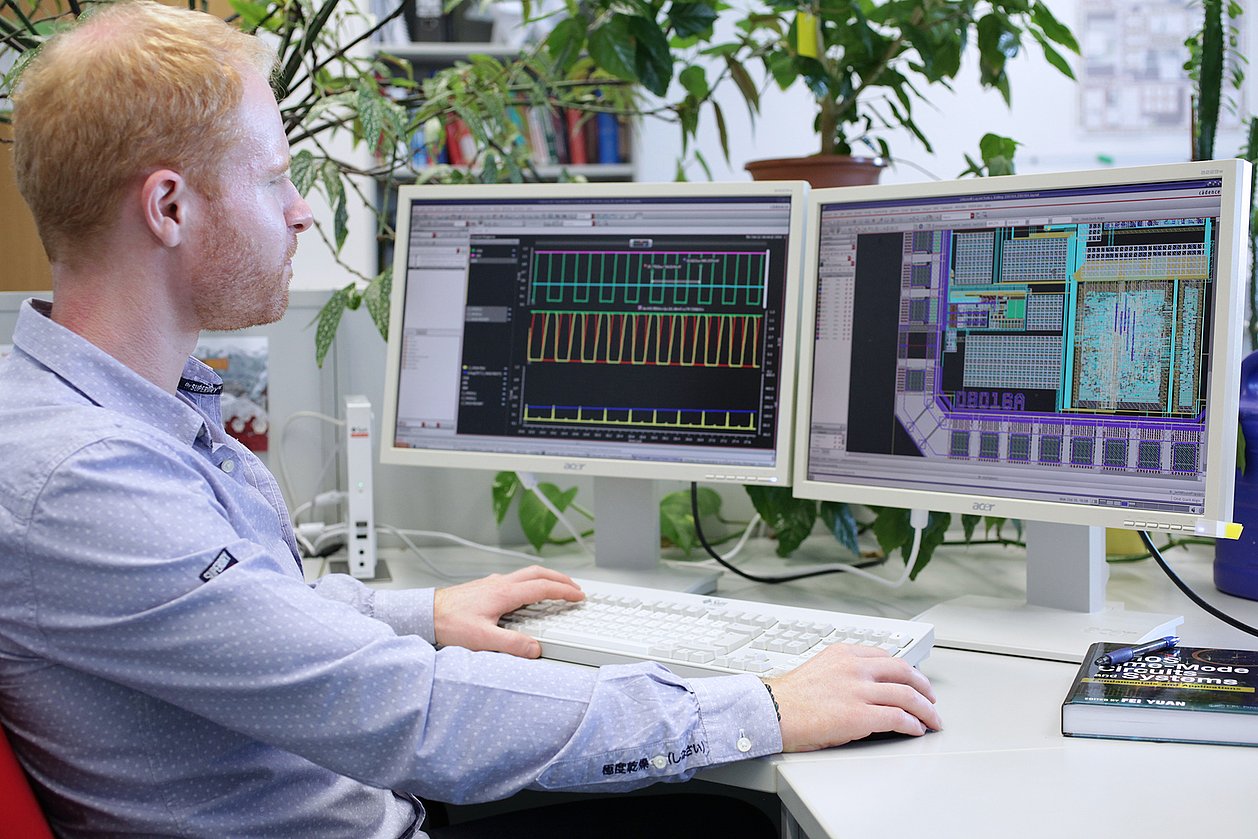
Here we investigate miniaturised systems manufactured in semiconductor technology consisting of microelectronic components for sensors applications, as well as methods to design these highly complex systems efficiently and safely.
Lead application
RFID sensor technology
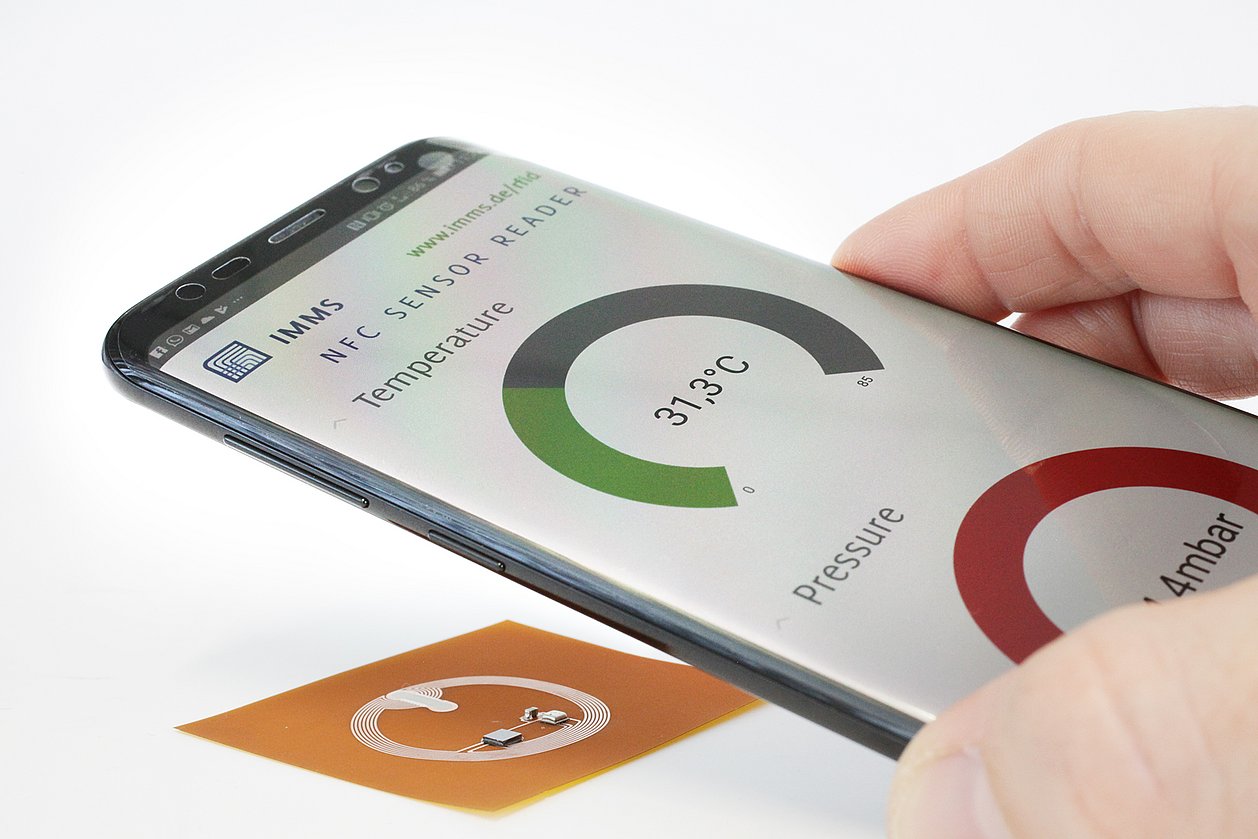
We are researching energy-efficient solutions for RFID sensor technology in order to open up new applications and, for example, to make processes in industry more resource-efficient.
Core topic
ULP sensor systems
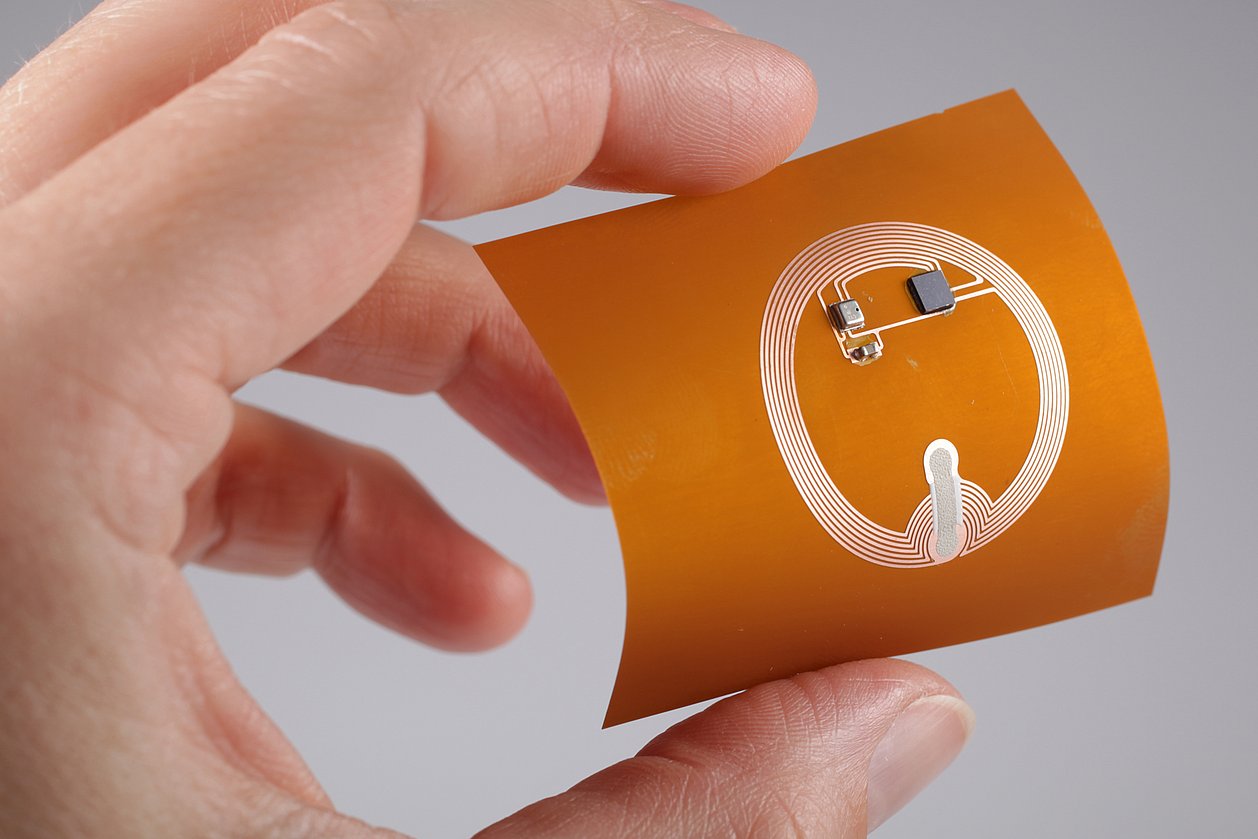
We research and develop ultra-low-power (ULP) sensor systems that require very little power and have integrated energy management components. Our goal is to use them to open up new applications for the Internet of Things.