

Press releases
Project launch for new glass break sensor with greater precision and higher robustness
Schmeissner and IMMS aim to surpass existing sensor standards
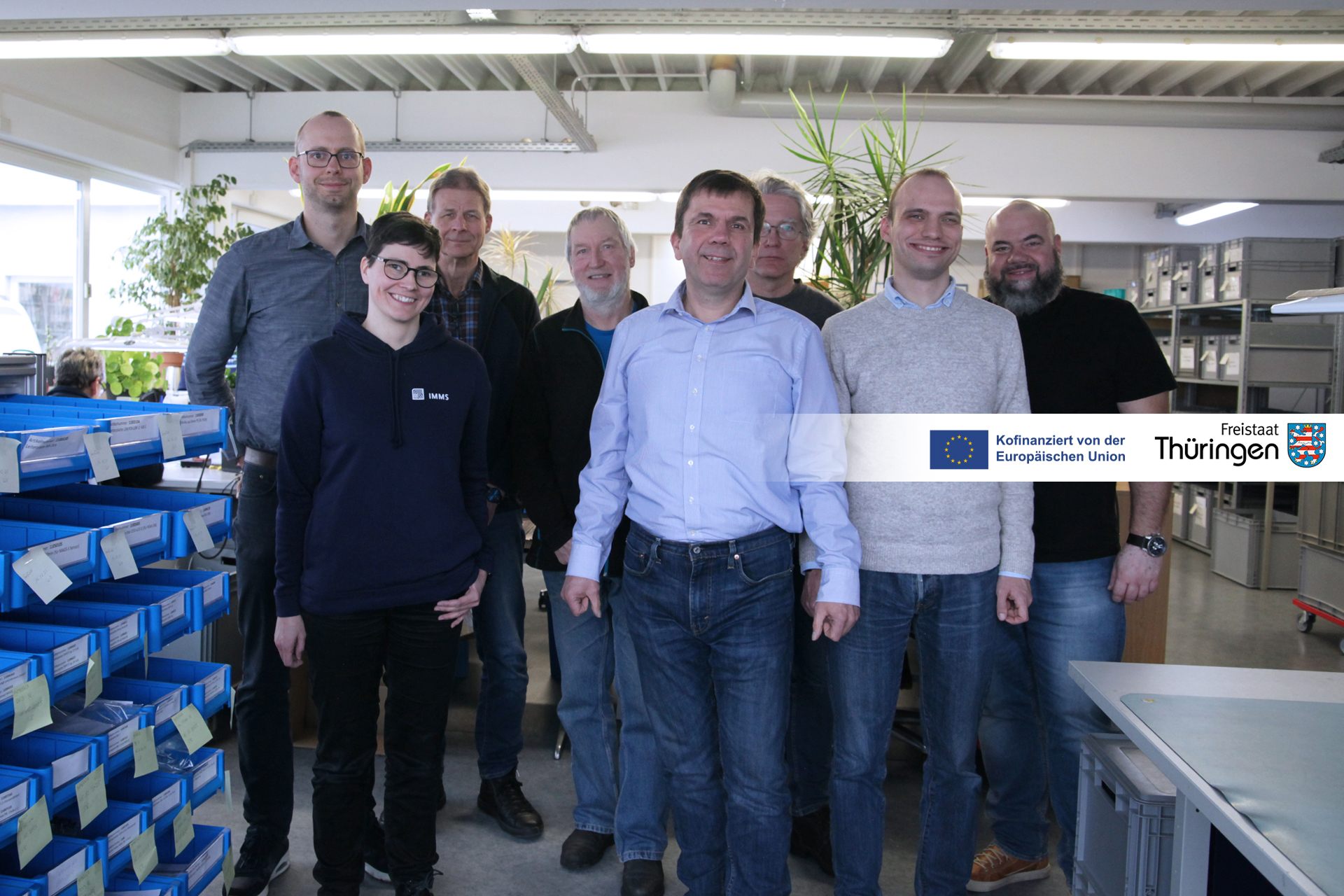
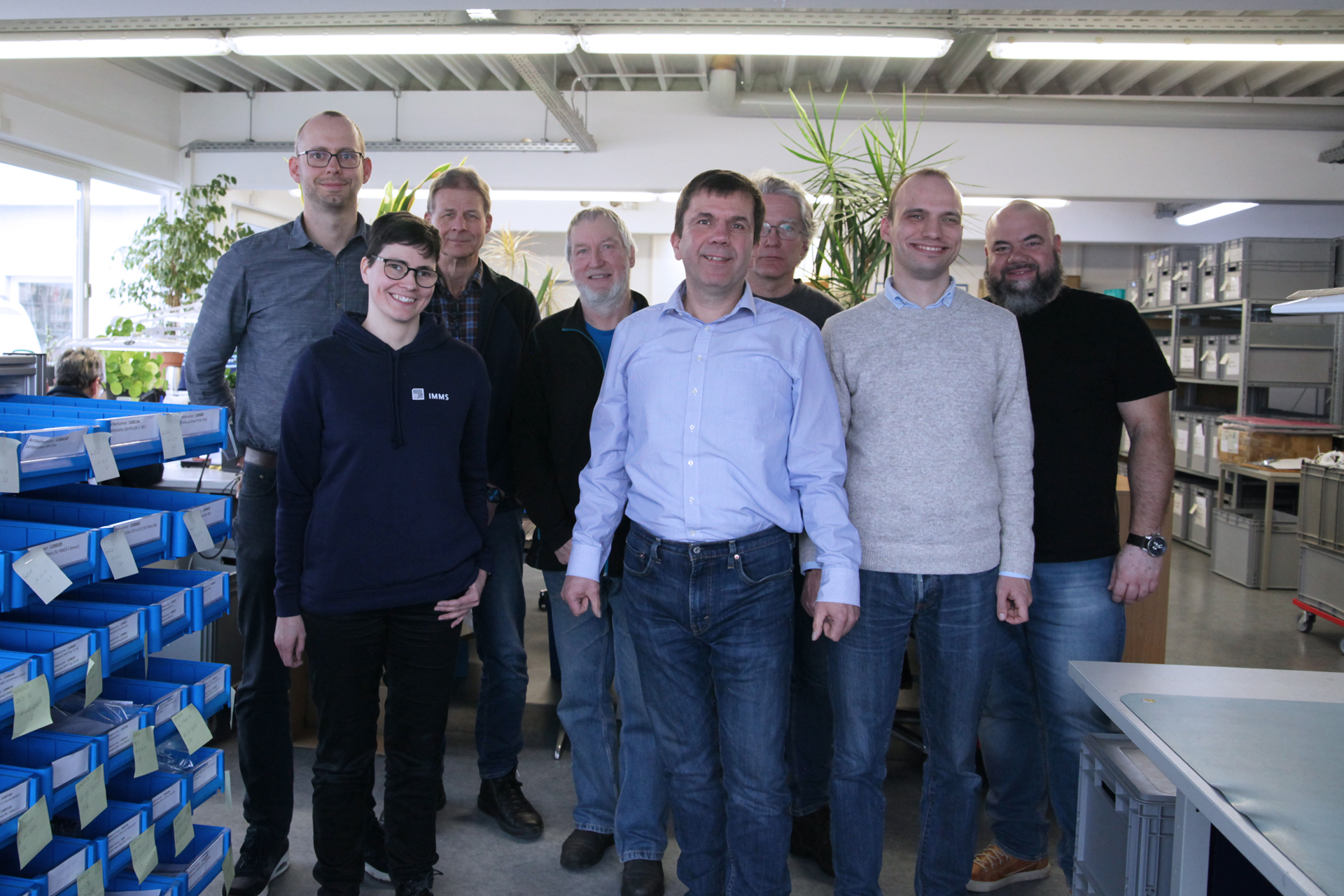
On 14 January 2026, partners SCHMEISSNER GmbH and IMMS Institut für Mikroelektronik- und Mechatronik-Systeme gemeinnützige GmbH (IMMS GmbH) kicked off their one-year joint project ‘Integration of novel signal processing methods and design solutions for robust glass breakage detection’ (RGBS). The aim of the project, which is funded by the German Land of Thüringen, is to develop a particularly sensitive ultrasonic glass break sensor. This sensor is intended to enable a wide variety of windows and doors to be retrofitted with burglary protection at low cost, while exceeding the strict testing requirements for VdS certification and eliminating false alarms. Such sensors are needed to secure critical infrastructure and high-risk properties such as museums, IT rooms, pharmacies and other commercial, storage and production buildings.
Ahead of burglars by exceeding the standard
‘We want to stay one step ahead of burglars,’ explains Uwe Schmeißner, Managing Director of SCHMEISSNER GmbH in Hermsdorf, Thüringen. Demand for ever better and at the same time cost-effective security technology solutions is very high, especially in light of recent events. ‘We have already developed retrofittable glass break sensors and established them on the market. These already meet some of the VdS criteria. That is the benchmark." The VdS Schadenverhütung GmbH test is stricter than the DIN standard in terms of material quality, installation and tamper protection and is required in areas with an increased or very high risk of burglary. However, Schmeißner adds that the company does not want to rest on its market success. ‘In the project, we want to apply two levers for better sensors – more sensitive detection, also with regard to potential new burglary methods, and greater robustness against false alarms.’ Repeated unwanted alarms in particular can lead to security personnel becoming desensitised and finally lead to the deactivation of the sensors by the operator.
The challenge of glass break sensors
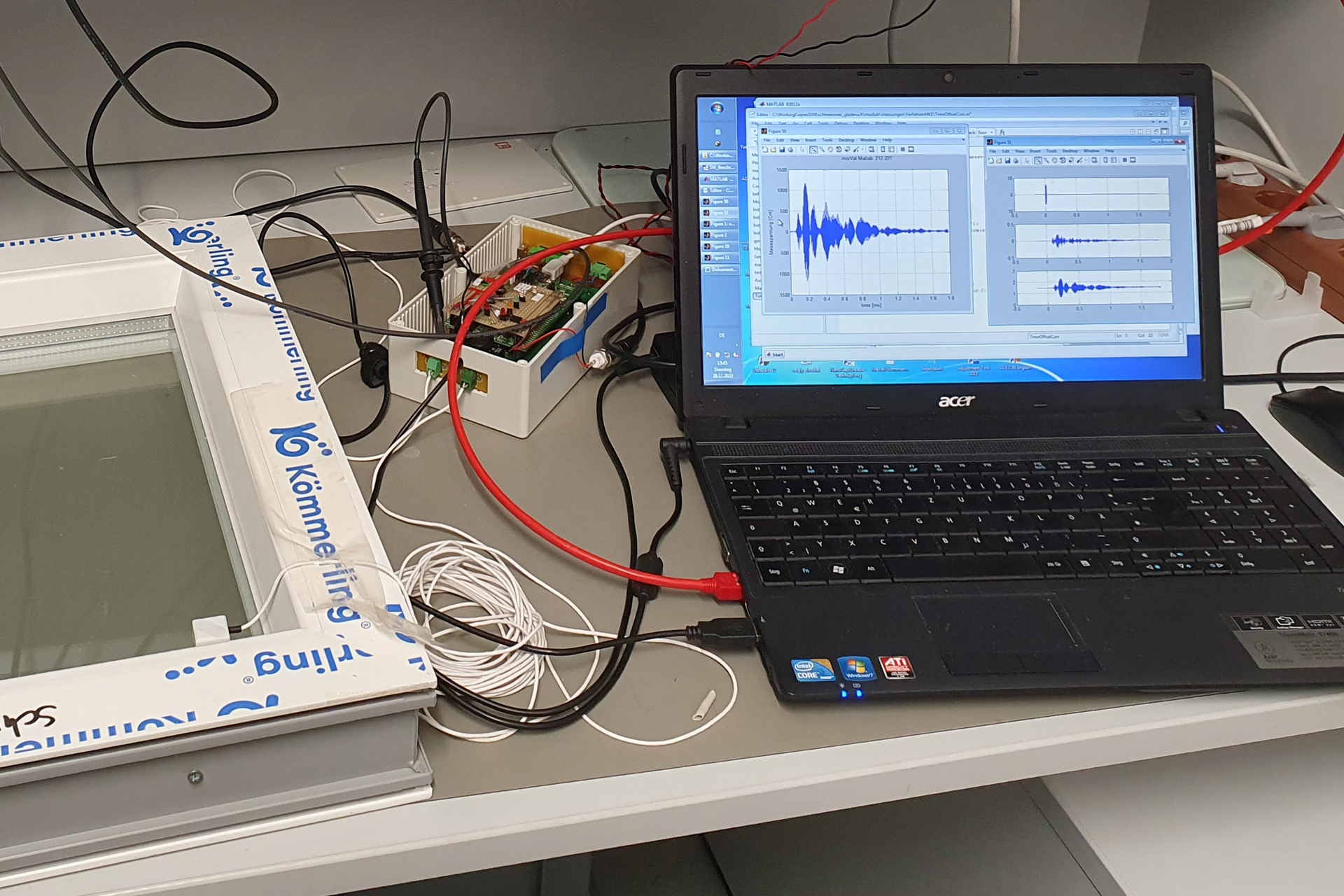
Glass breakage sensors evaluate ultrasonic signals generated by vibrations in the glass. These signals change when external influences affect the glass. Typical signals caused by normal environmental influences such as temperature fluctuations, rain, hail or stones thrown up by passing vehicles must be detected, as must signals caused by the violent breaking of the pane, the cutting out of pieces or simply stress cracks due to large temperature differences. Distinguishing between these scenarios places high demands on the sensor's evaluation algorithms. In addition, new types of break-in methods may not only require more sensitive evaluation, but may also influence the ultrasonic signals in such a way that immunity to false alarms will become even more difficult in the future.
More sensitive and robust glass break sensors targeted
The innovative glass break sensors, which are particularly sensitive yet robust against false alarms, are to be achieved through a powerful and interference-resistant hardware design. ‘In addition to the new hardware, the key factor will be that we are using innovative analysis and evaluation methods,’ explains Dr Ludwig Herzog, Head of Mechatronics and RGBS Project Manager at IMMS. The aim is to use complex algorithms to clearly distinguish between break detection and permissible impacts.
IMMS is coordinating the project and will be responsible in particular for developing the methodology and creating a more sensitive and robust fault detection system. SCHMEISSNER GmbH will primarily develop the hardware and protect it against interference, carry out validation measurements and take further preparatory steps for later product development, such as EMC simulation and testing, as well as developing the software for the user interface.
The aim is to develop an innovative yet inexpensive retrofit solution that meets the growing demands of customers and users of glass break sensors by contributing to the highest level of property security and that strengthens the competitiveness of Thuringian companies in this field of application.

Förderung
The joint project “Integration of innovative signal processing methods and design solutions for robust glass breakage detection“ (RGBS) is supported by the funding programme of the German Land of Thüringen for the promotion of research, technology and innovation (RTI) as the research and development initiative Thüringen Verbund under the joint project number 1007968, the IMMS topic “Development and implementation of innovative signal processing for highly sensitive breakage detection in glass panes” under the reference 2025 VDY 0061.
This might also be interesting for you
Core topic
Modular and mobile test systems
Test capabilities are an integral part of all application developments. We research modular test systems that can be adapted flexibly and quickly to new challenges through optimised functional test units.

Research field
Smart distributed measurement and test systems
Integrated sensor ICs are the heart of sensor and measurement systems like wireless sensors, stationary or handheld devices. We are researching solutions for ever more powerful sensors with more intrinsic intelligence and task allocation in the network.
![[Translate to English:]](/fileadmin/_processed_/a/7/csm_20130223_dcSen_ProberEF_MM_MG_3325_1920x1280_588e478d86.jpg "[Translate to English:]")
Service for R&D
Test and characterisation
We test, characterise and qualify your circuits, sensors and systems. Based on our excellent pool of measurement equipment, we develop an individually adapted test environment for measurements on wafers and individual components.
Related content
Project
RGBS
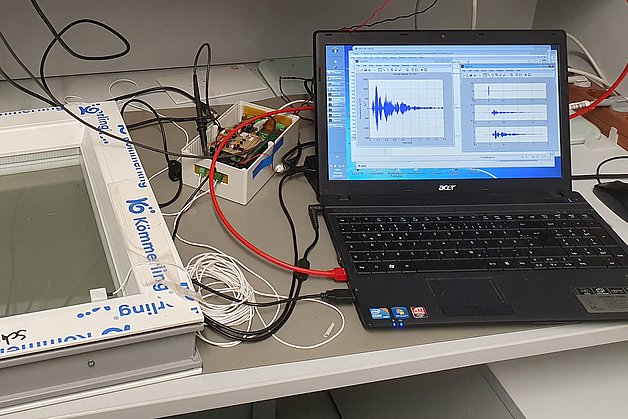
Development of a new retrofittable glass break sensor based on ultrasound technology with greater precision and robustness
Contact
Contact
Dipl.-Hdl. Dipl.-Des. Beate Hövelmans
Head of Corporate Communications
beate.hoevelmans(at)imms.de+49 (0) 3677 874 93 13
Beate Hövelmans is responsible for the text and image editorial work on this website, for the social media presence of IMMS on LinkedIn and YouTube, the annual reports, for press and media relations with regional and specialist media and other communication formats. She provides texts, photographs and video material for your reporting on IMMS, arranges contacts for interviews and is the contact person for events.