
MMAR 2026
Nonholonomic Omnidirectional Mobile Robot with Dual Steerable Drive Modules
Alex Huaman (1), Michael Katzschmann (1), Tom Mehner (2), Johann Reger (3)
(1) IMMS; (2) MetraLabs GmbH; (3) Technische Universität Ilmenau
Abstract:
Part 1: Modelling
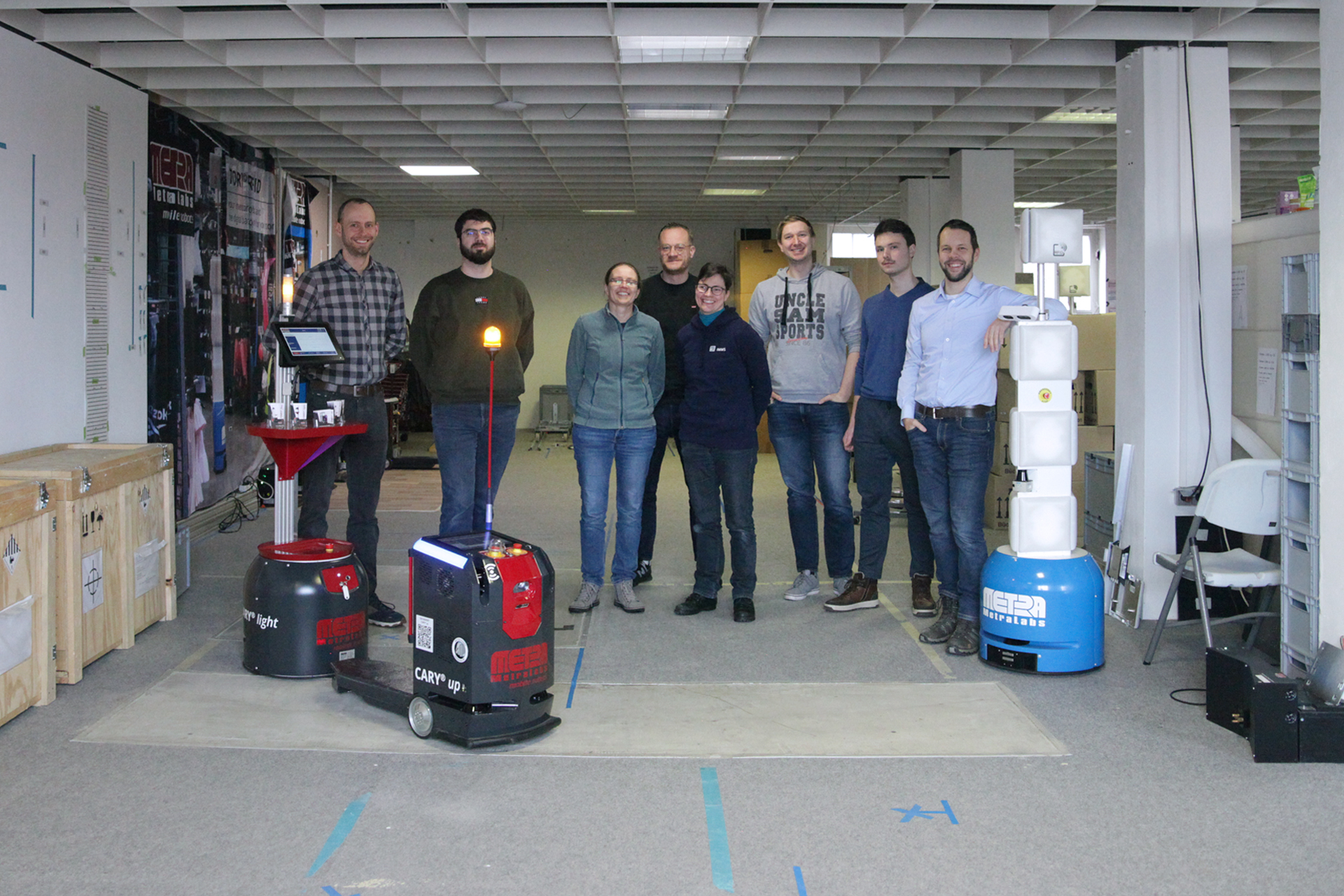
This paper addresses the modelling of an omnidirectional mobile robot equipped with dual steerable drive modules that are subject to nonholonomic rolling constraints. This class of mobile robots with steerable driving units is nowadays attractive for tasks that demand locomotion versatility and steering reorientation capability. However, their motion is constrained by rolling conditions that explicitly depend on the steering configuration, which increases the complexity of the modelling problem compared to conventional fixed-wheel platforms. The proposed formulation includes planar kinematics, rigid-body dynamics under rolling constraints, and a reduced virtual-velocity parameterisation that characterises admissible motions in the null space of the constraints. The resulting model offers a compact and physically consistent basis for simulation and subsequent control design.
Part 2: Tracking Control
This paper addresses the tracking control problem for a dual-steering omnidirectional robot subject to rolling constraints, where the control action is applied along the admissible direction of motion. To this end, a cascade controller is developed from the reduced-order model in virtual-velocity coordinates. The outer loop regulates the admissible component of the tracking error, while the inner loop regulates the forward velocities of the drive modules. The resulting formulation is consistent with the constrained model and is defined on a singularity-free domain. Based on the reduced-order dynamics, the closed-loop design guarantees exponential convergence of the inner velocity error and local convergence of the admissible tracking error.
Part 3: Steering Control
This paper addresses the steering control layer of a dual-steering omnidirectional mobile robot, where motion control alone is not sufficient to regulate the direction of motion because the steering configuration determines the admissible motion of the platform. The objective is to regulate the steering behaviour of the drive modules to support direction control and direction correction, which are instrumental for compensating for path deviations and recovering the desired motion orientation while remaining consistent with the constrained equation of motion of the robot. The resulting formulation complements the admissible tracking controller developed in the companion paper and provides the direction-related components required for precise and robust robot locomotion.
Related content
This might also be interesting for you
![[Translate to English:]](/fileadmin/_processed_/9/0/csm_20200731_IMG_2732_K4PNP-INPOS_SG_1920x1280_7c70c69f8a.jpg "[Translate to English:]")
Service for R&D
Development of mechatronic systems
We develop actuator systems and open- and closed-loop controls as embedded solutions according to customer specifications with highest demands on precision, dynamics, available space, performance and efficiency.

Service for R&D
Finite Element Modeling
We support you in the concept and development phase of new products with calculations and simulations to shorten development times and improve product parameters such as weight & material savings or minimisation of natural vibrations.
Research field
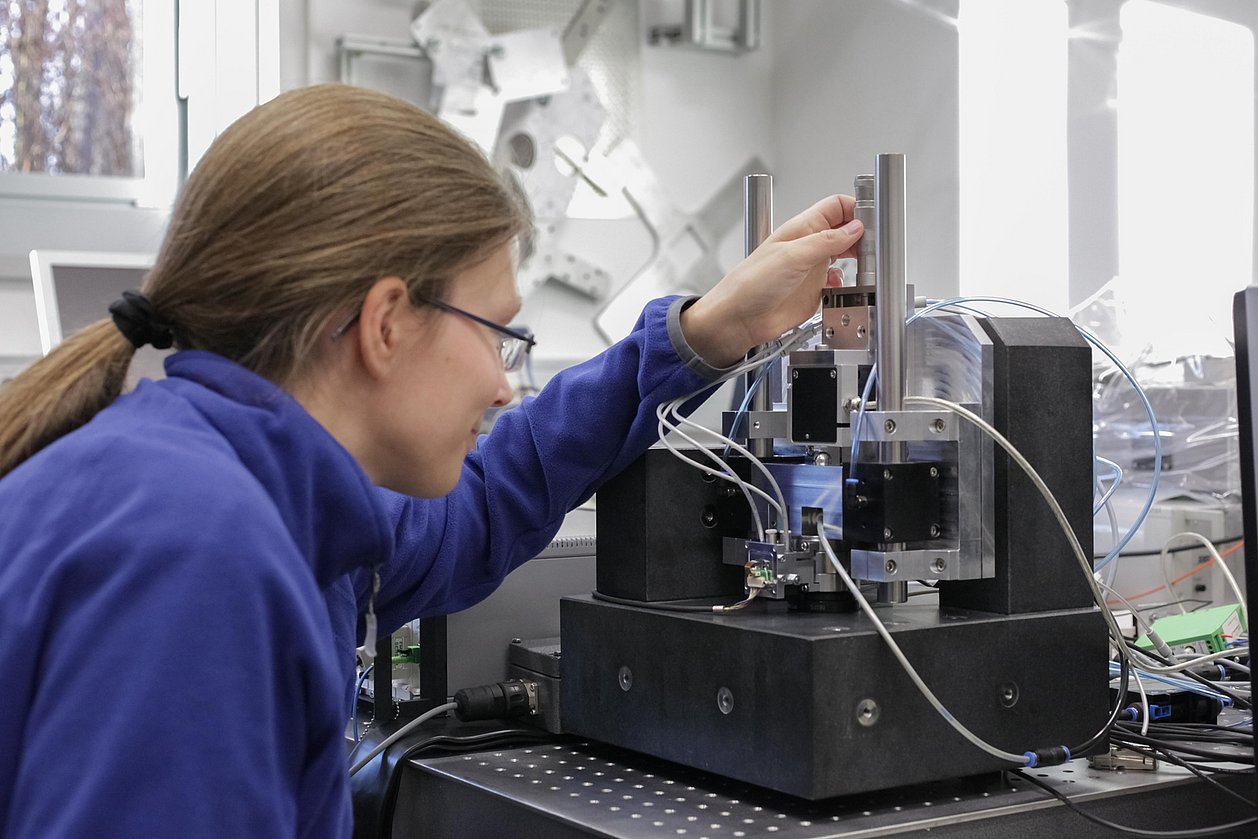
Magnetic 6D direct drives with nm precision
To enable the manufacturing of macroscopic high-tech products with microscopic precision, we are researching scientific principles and technical solutions for nanopositioning systems for large motion ranges.
Contact
Contact
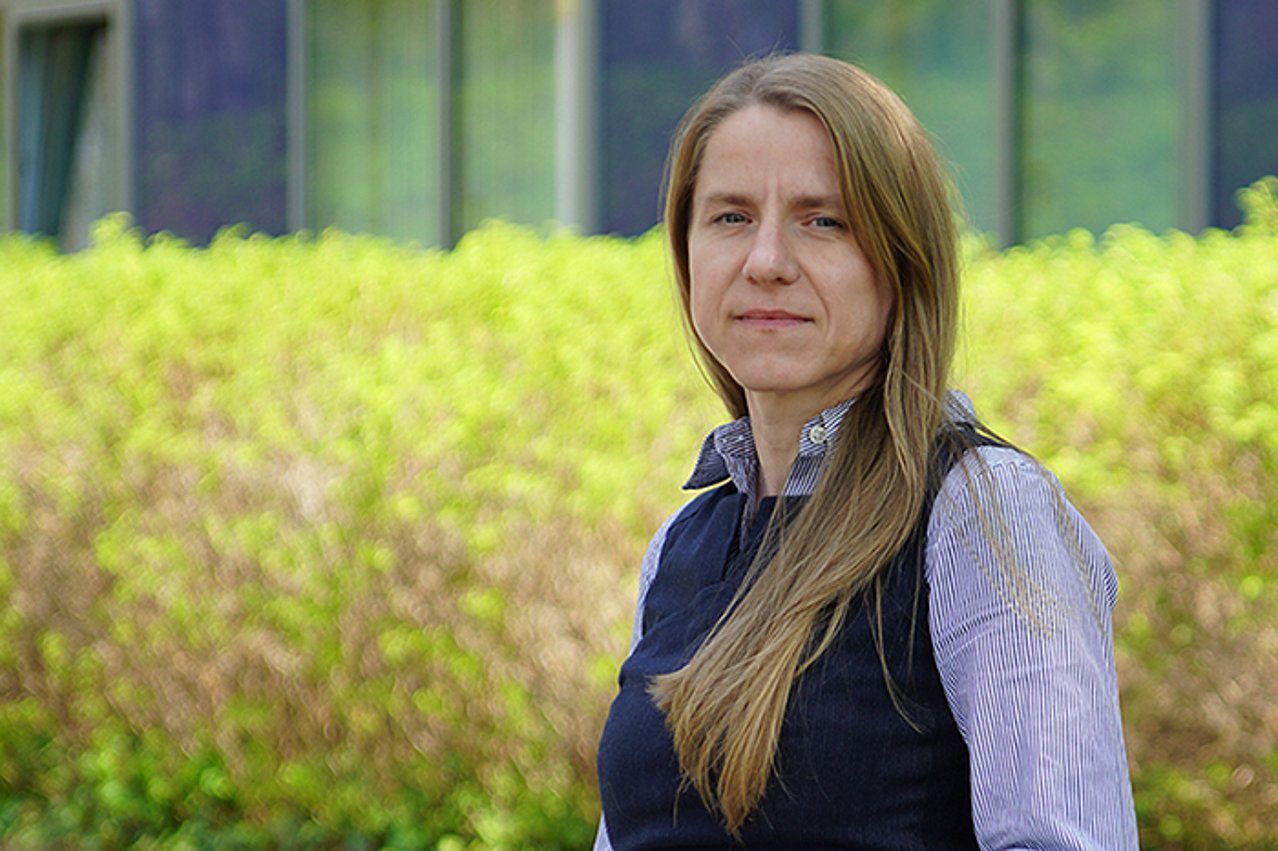
Dipl.-Hdl. Dipl.-Des. Beate Hövelmans
Head of Corporate Communications
beate.hoevelmans(at)imms.de+49 (0) 3677 874 93 13
Beate Hövelmans is responsible for the text and image editorial work on this website, for the social media presence of IMMS on LinkedIn and YouTube, the annual reports, for press and media relations with regional and specialist media and other communication formats. She provides texts, photographs and video material for your reporting on IMMS, arranges contacts for interviews and is the contact person for events.