
MMAR 2026
Nonholonomic Omnidirectional Mobile Robot with Dual Steerable Drive Modules
Alex Huaman (1), Michael Katzschmann (1), Tom Mehner (2), Johann Reger (3)
(1) IMMS; (2) MetraLabs GmbH; (3) Technische Universität Ilmenau
Abstract:
Part 1: Modelling
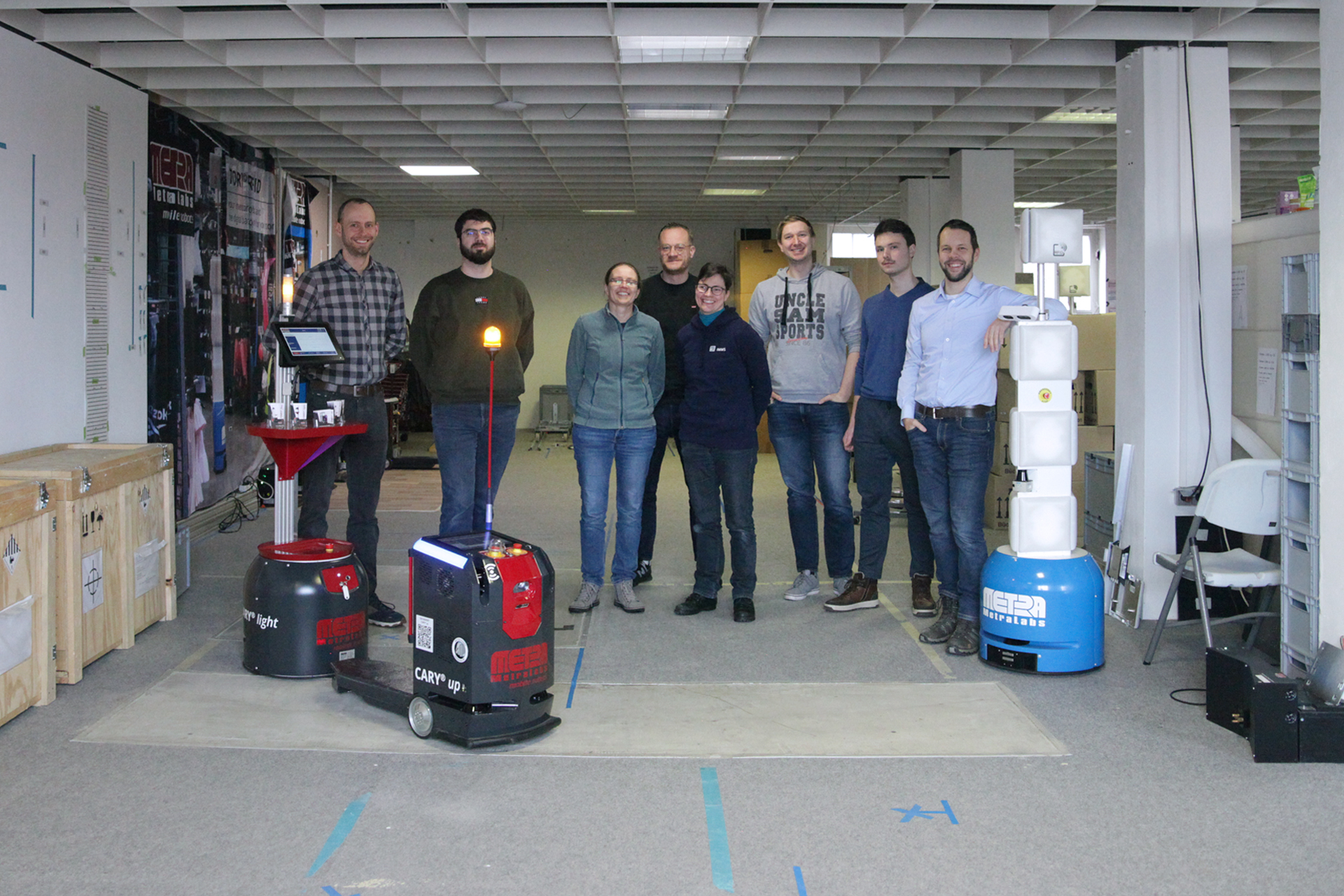
This paper addresses the modelling of an omnidirectional mobile robot equipped with dual steerable drive modules that are subject to nonholonomic rolling constraints. This class of mobile robots with steerable driving units is nowadays attractive for tasks that demand locomotion versatility and steering reorientation capability. However, their motion is constrained by rolling conditions that explicitly depend on the steering configuration, which increases the complexity of the modelling problem compared to conventional fixed-wheel platforms. The proposed formulation includes planar kinematics, rigid-body dynamics under rolling constraints, and a reduced virtual-velocity parameterisation that characterises admissible motions in the null space of the constraints. The resulting model offers a compact and physically consistent basis for simulation and subsequent control design.
Part 2: Tracking Control
This paper addresses the tracking control problem for a dual-steering omnidirectional robot subject to rolling constraints, where the control action is applied along the admissible direction of motion. To this end, a cascade controller is developed from the reduced-order model in virtual-velocity coordinates. The outer loop regulates the admissible component of the tracking error, while the inner loop regulates the forward velocities of the drive modules. The resulting formulation is consistent with the constrained model and is defined on a singularity-free domain. Based on the reduced-order dynamics, the closed-loop design guarantees exponential convergence of the inner velocity error and local convergence of the admissible tracking error.
Part 3: Steering Control
This paper addresses the steering control layer of a dual-steering omnidirectional mobile robot, where motion control alone is not sufficient to regulate the direction of motion because the steering configuration determines the admissible motion of the platform. The objective is to regulate the steering behaviour of the drive modules to support direction control and direction correction, which are instrumental for compensating for path deviations and recovering the desired motion orientation while remaining consistent with the constrained equation of motion of the robot. The resulting formulation complements the admissible tracking controller developed in the companion paper and provides the direction-related components required for precise and robust robot locomotion.
Zugehörige Inhalte
Projekt
ERA-AMR
Entwicklung und Realisierung optimierter Antriebssysteme für Autonome Mobile Roboter
Das könnte Sie auch interessieren
Dienstleistung
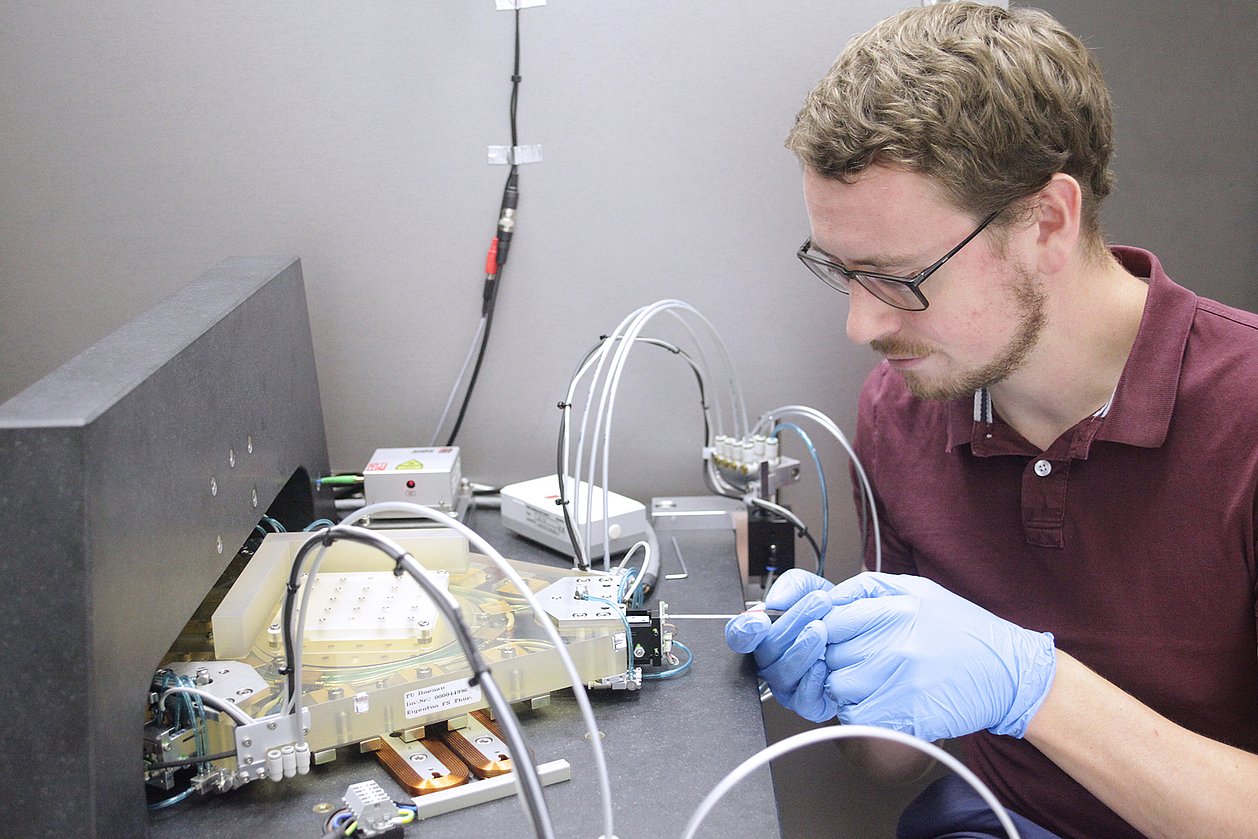
Entwicklung mechatronischer Systeme
Wir entwickeln Aktorsysteme, Steuerungen und Regelungen als eingebettete Lösungen nach Kundenspezifikation mit höchsten Anforderungen an Präzision, Dynamik, verfügbaren Bauraum, Performance und Effizienz.

Dienstleistung
FE-Modellierung und Simulation
Wir unterstützen Sie in der Konzept- und Entwicklungsphase neuer Produkte mit Berechnungen und Simulationen, um Entwicklungszeiten zu verkürzen und Produktparameter zu verbessern, wie Gewichts- & Materialeinsparung oder Minimierung der Eigenschwingungen.
Forschungsfeld
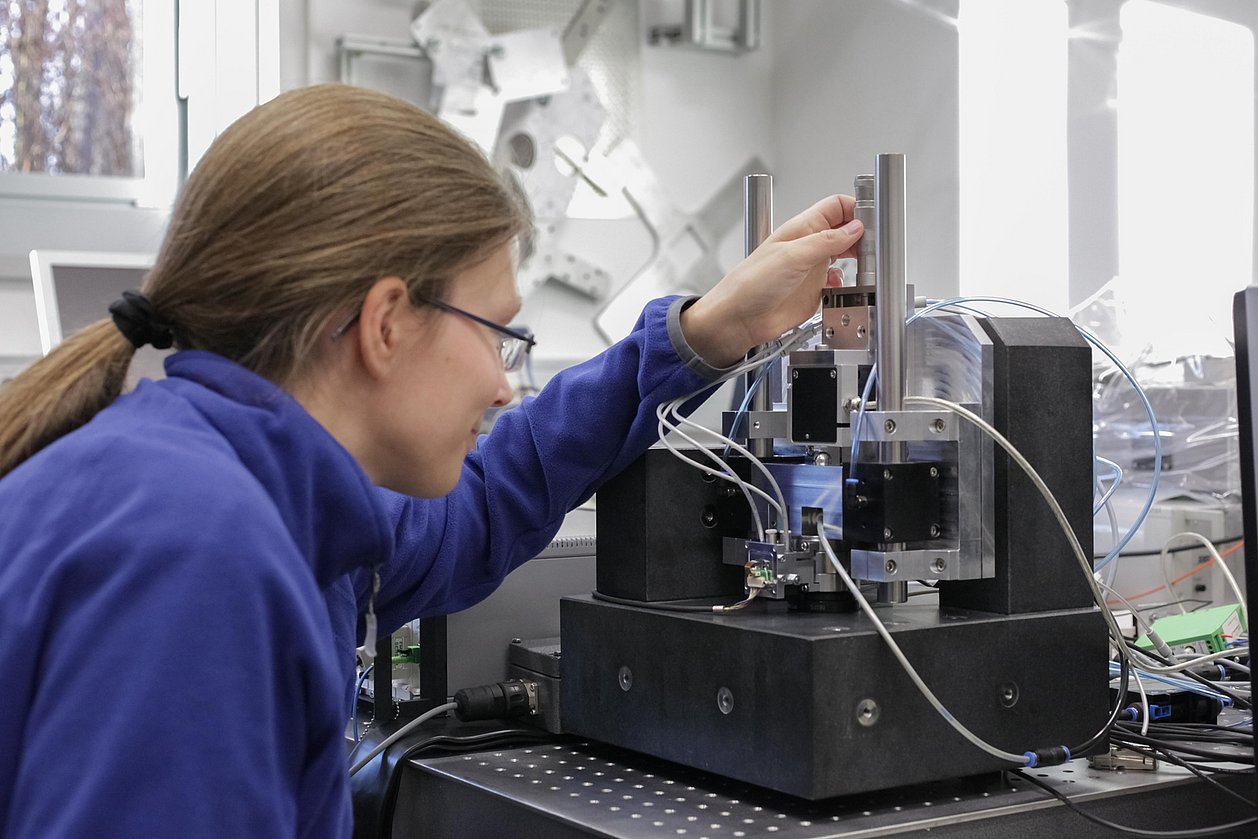
Magnetische 6D-Direktantriebe mit nm-Präzision
Um die Fertigung makroskopischer High-Tech-Produkte mit mikroskopischer Präzision zu ermöglichen, forschen wir an wissenschaftlichen Grundlagen und technischen Lösungen für Nanopositioniersysteme für große Bewegungsbereiche.
Kontakt
Kontakt
Dipl.-Hdl. Dipl.-Des. Beate Hövelmans
Leiterin Unternehmenskommunikation
beate.hoevelmans(at)imms.de+49 (0) 3677 874 93 13
Beate Hövelmans ist verantwortlich für die Text- und Bildredaktion dieser Webseite, für die Social-Media-Präsenz des IMMS auf LinkedIn und YouTube, die Jahresberichte, für die Pressearbeit mit Regional- und Fachmedien und weitere Kommunikationsformate des IMMS. Sie stellt Ihnen Texte, Bilder und Videomaterial für Ihre Berichterstattung zum IMMS bereit, vermittelt Kontakte für Interviews und ist Ansprechpartnerin für Veranstaltungen.