

Press releases
Silicon Science Award for fast LEDs for in-vitro diagnostics
Young researcher from Thüringen honoured for developing highly dynamic LED operation for time-resolved fluorescence measurements
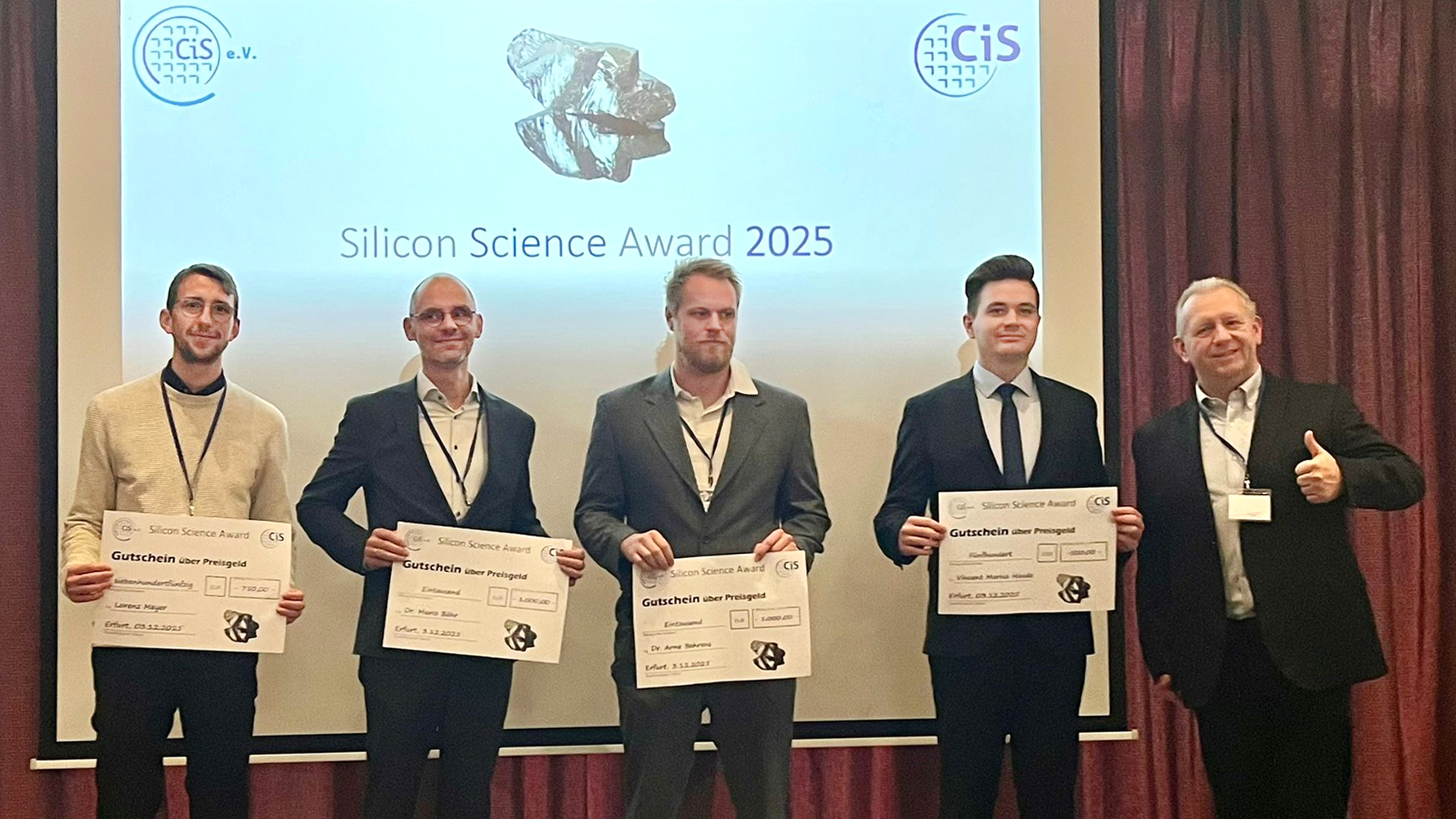
Vincent Haude, electrical engineer and researcher at IMMS Institut für Mikroelektronik- und Mechatronik-Systeme gemeinnützige GmbH (IMMS GmbH), was honoured with the Silicon Science Award at the international Waferbond25 conference in Chemnitz on 3 December 2025. His award-winning thesis, ‘Development and characterisation of a circuit topology for generating short LED light pulses,’ was supervised at IMMS and Technische Universität Ilmenau. The result is a very compact system that brings significant improvements in terms of the dynamics and optical switching times of LEDs for the development of systems for time-resolved fluorescence measurement. The work of the Thuringian scientist is a significant contribution to integrated sensor systems for in-vitro diagnostics. To this end, IMMS researches and develops solutions for point-of-care devices for rapid, patient-oriented diagnostics.
Race for decay times in fluorescence markers decisive
‘Vincent Haude has produced an outstanding piece of work on a very challenging topic that strengthens Thüringen's innovative power in the key sensor technology sector,’ said Prof. Hannes Töpfer, Head of Theoretical Electrical Engineering at Technische Universität Ilmenau. The bachelor's thesis addresses a topic that is currently very relevant in the broader research context: ‘With increasingly sensitive sensor systems, analytical methods in medicine and environmental analysis can be improved and are therefore of considerable social interest,’ Töpfer continues. In diagnostics, sensors are used to measure the fluorescent properties of biological samples.
‘Fluorescent dyes are used as markers in in-vitro diagnostics, for example,’ explains Vincent Haude. With their help, even the smallest concentrations of pathogens can be detected using analytical equipment in special laboratories, which would not be possible with standard tests, Haude continues. ‘This is naturally of interest if, like IMMS, you want to build mobile diagnostic systems.’ The dyes emit light of a characteristic wavelength when excited by light of a different wavelength. Depending on the dye, this fluorescence is visible for a few nanoseconds to microseconds and can therefore be measured, provided it does not overlap with the excitation light. IMMS develops semiconductor-based microelectronic chips that are used to measure the intensity of the fluorescent light over time. The emitted light is measured after the excitation light from an LED has been switched off and has decayed. ‘The dyes can also be excited in the same way with lasers, but these are relatively expensive at these wavelengths,’ Haude continues. Optical filters can also be used to separate excitation light and fluorescence light, as in large laboratory analysers, but this increases the installation space and costs.
‘We want to develop cost-effective mobile systems, which is why we want to use standard LEDs as pulse light sources at IMMS,’ explains Haude. The faster and better they can be switched on and off, the more flexible and reliable they are for use with different fluorescent dyes and thus applications.
Optical dynamics and optical switching times of LEDs in nanoseconds
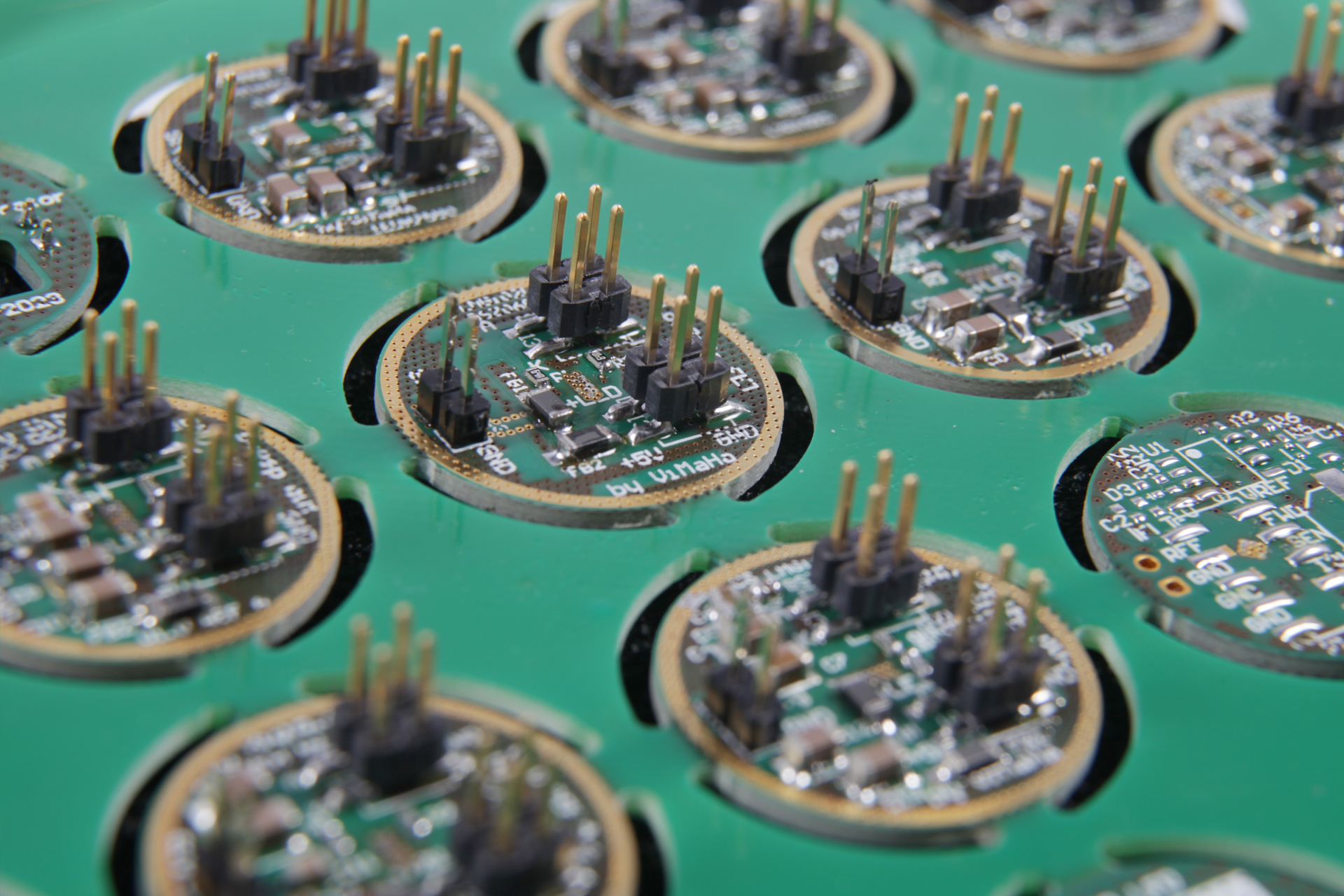
To achieve this goal, Vincent Haude used his detailed research into the physical fundamentals to identify the relevant parameters that influence the dynamic switching behaviour of LEDs. Using these findings, he selected commercially available standard LEDs with regard to their switching behaviour, researched and developed pulse driver circuits for LEDs, simulated selected circuits, created high-frequency-optimised layouts and built them on printed circuit boards as a characterisation setup. He measured these circuits and the selected LEDs both electrically and optically.
‘Vincent Haude was able to reduce the afterglow of LEDs to a few nanoseconds with the help of optimised circuits,’ explains Alexander Rolapp, specialist for the characterisation and testing of integrated circuits at IMMS and supervisor of the bachelor's thesis. ‘The limit was always the LED itself and never the circuit.’ On this basis, Vincent Haude developed a very compact LED pulse system that not only significantly improves the optical dynamics and optical switching times of LEDs, but can also be easily integrated into existing setups. ‘Actively switching off LEDs in this way shifts their dynamics for the applications we are interested in to areas that are otherwise reserved for lasers,’ Rolapp summarises.
Thus, Vincent Haude's findings and his characterisation setup are an important building block that will significantly advance future research and development in time-resolved fluorescence.
Mix of theory and practice strengthens young talent and the economy
‘For my thesis, I benefited not only from the state-of-the-art measurement equipment at IMMS. In order to understand LEDs as well as possible, I studied solid-state physics, optoelectronics and electrical engineering. Here, I was helped by the in-depth knowledge of my colleagues at IMMS, who were able to classify and answer even the most complicated questions,’ says Haude, expressing his gratitude for their support. Born in Thuringia, Haude took advantage of opportunities such as the Basic Engineering School at Technische Universität Ilmenau early on to combine theory with practice, and later became a supervisor there himself. He has been at IMMS since 2021 – first as an intern and assistant, and since completing his bachelor's degree as a research assistant – and will soon complete his master's degree. ‘The Silicon Science Award shows that the mix of theory and practice that we offer at Ilmenau TU together with IMMS is bearing fruit,’ says Töpfer. Haude is perfectly prepared for a career start in application-oriented research, as practised at IMMS and incorporated into products from partners in medical technology, sensor technology and industry, Töpfer continues. At the same time, thanks to his solid education, Haude has all the tools he needs to jump straight into research and development in industry or to found a start-up. ‘I'm excited to see where the journey takes me,’ comments Haude with a wink.
About the Silicon Science Award
The Silicon Science Award is presented every two years by CiS e.V. and the CiS Research Institute for Microsensor Technology. Prizes are awarded for outstanding bachelor’s and master’s theses as well as dissertations written at technical colleges, universities and non-university institutions. The evaluation is based on the reference to silicon-based microsystems technology and optoelectronics as well as quantum technologies along the value chain and the criteria of degree of innovation and originality, scientific significance, economic usability and overall concept. As the organizsr of this competition, the association wants to encourage young scientists to deal with these topics and research tasks, which are fundamental to many scientific and economic innovations in order to solve social challenges such as climate protection or resource efficiency. CiS e.V. is the organiser of the competition.

This might also be interesting for you
Lead application
Sensor systems for in-vitro diagnostics
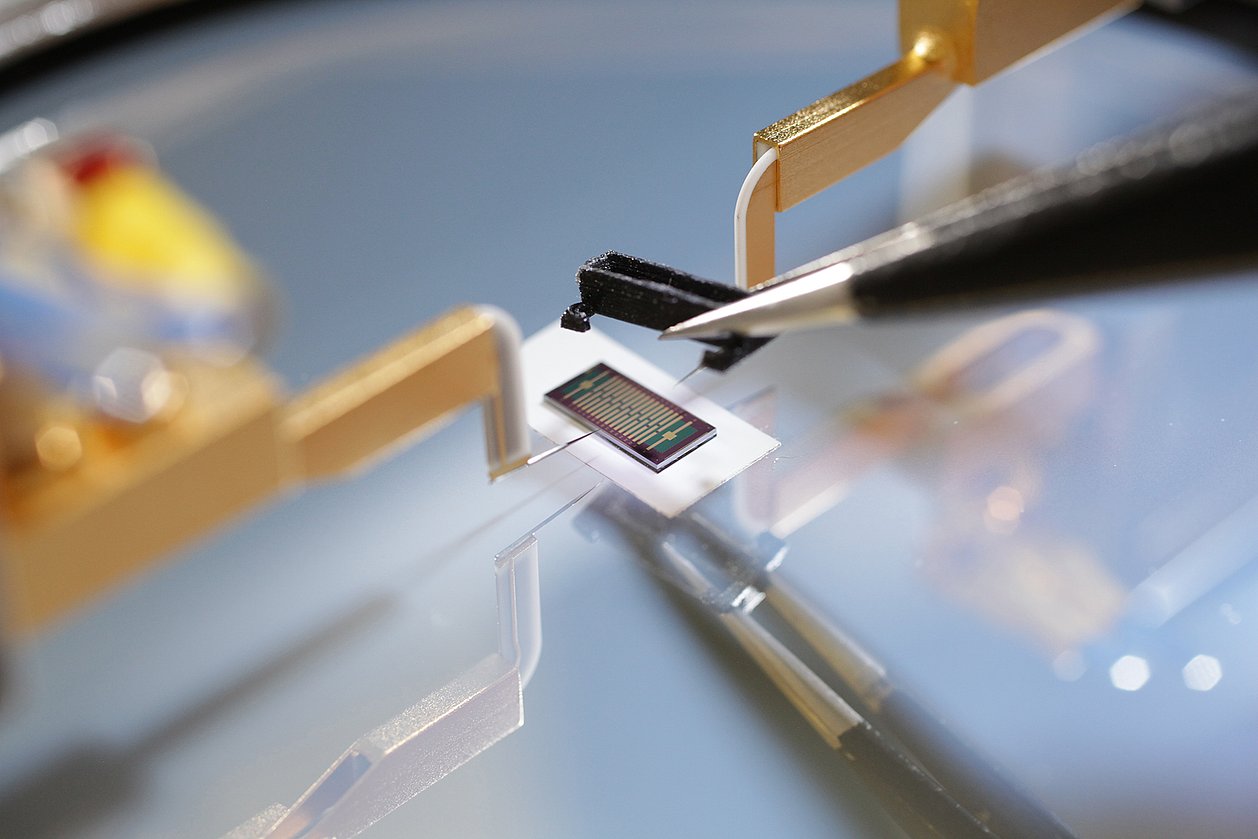
Here we are developing sensor systems for in-vitro diagnostics that enable individual, decentralised health monitoring for all with electronic rapid tests.
Core topic
Modular and mobile test systems
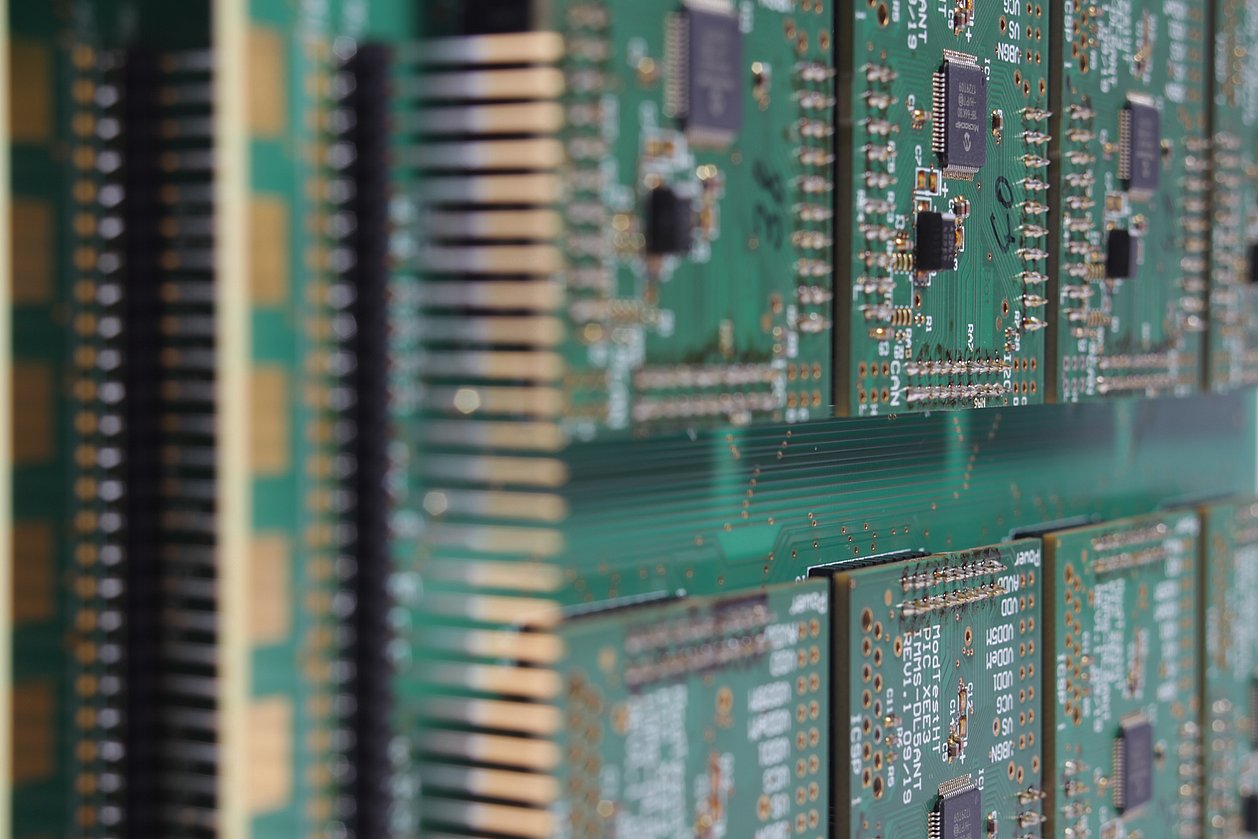
Test capabilities are an integral part of all application developments. We research modular test systems that can be adapted flexibly and quickly to new challenges through optimised functional test units.

Service for R&D
Test and characterisation
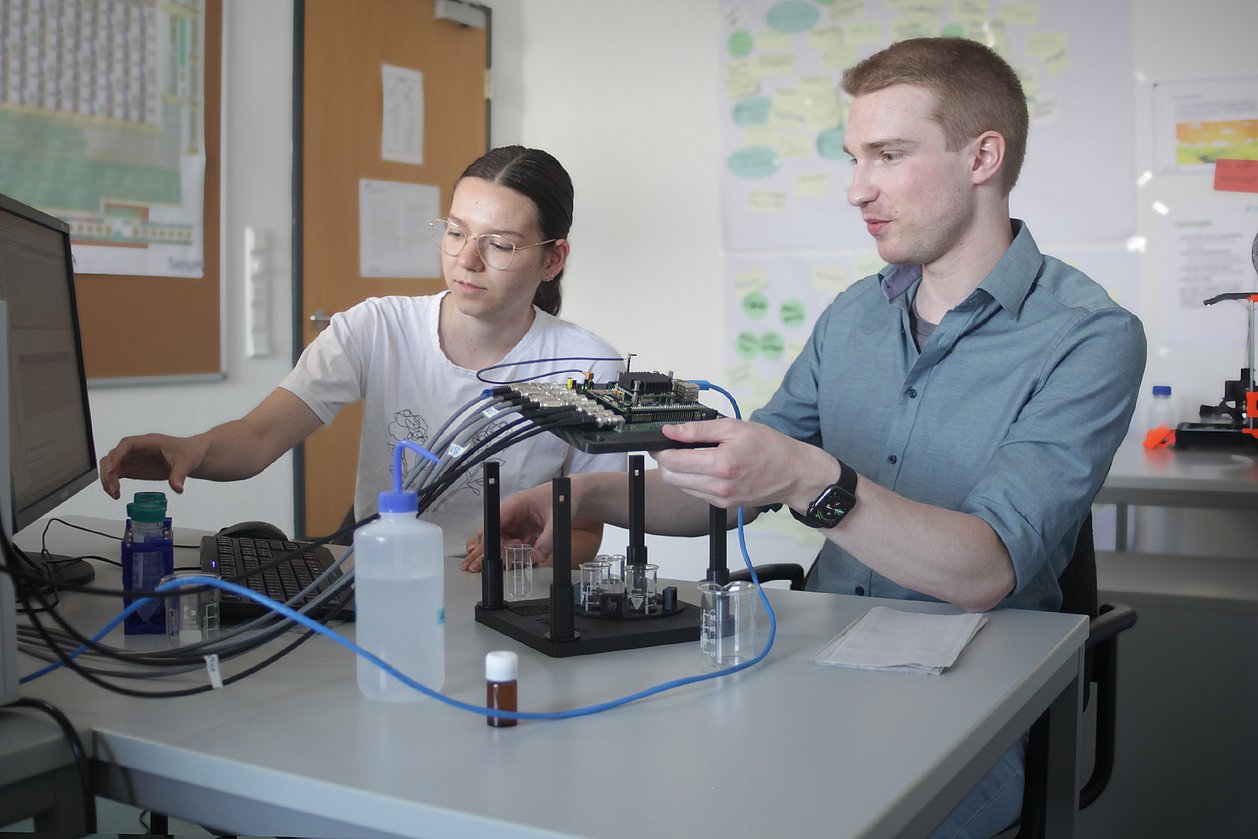
We test, characterise and qualify your circuits, sensors and systems. Based on our excellent pool of measurement equipment, we develop an individually adapted test environment for measurements on wafers and individual components.
Career
Internships, jobs, BSc/MSc subjects
During your studies, you can get involved in ongoing research projects. Go to the limits of what is technically feasible and enter new ground together with us. We offer many practice-oriented topics as internships, bachelor and master theses.
Related content
Award
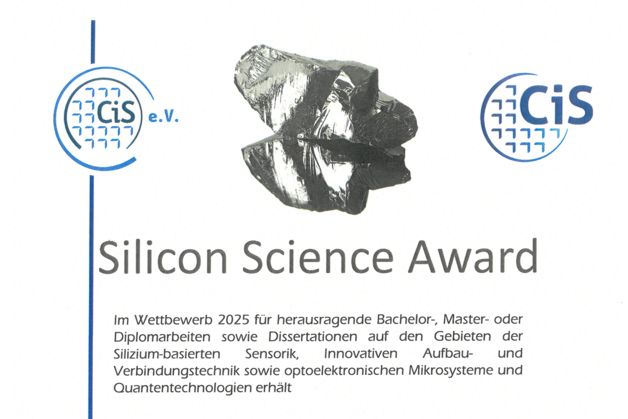
Silicon Science Award for thesis "Development and characterisation of a circuit topology for generating short LED light pulses"
Vincent Haude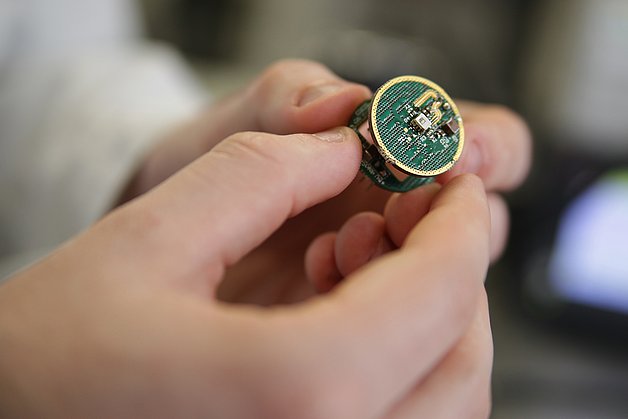
Contact
Contact
Dipl.-Hdl. Dipl.-Des. Beate Hövelmans
Head of Corporate Communications
beate.hoevelmans(at)imms.de+49 (0) 3677 874 93 13
Beate Hövelmans is responsible for the text and image editorial work on this website, for the social media presence of IMMS on LinkedIn and YouTube, the annual reports, for press and media relations with regional and specialist media and other communication formats. She provides texts, photographs and video material for your reporting on IMMS, arranges contacts for interviews and is the contact person for events.